Buying Guide
Best Hunting Boot Insoles
There is no such thing as a hunting insole, and that is the useful starting point. What a hunting boot needs is a hiking-grade insole matched to your arch - and installed without costing you the toe room your socks need. Here are the five worth buying, and the volume mistake that undoes all of them.
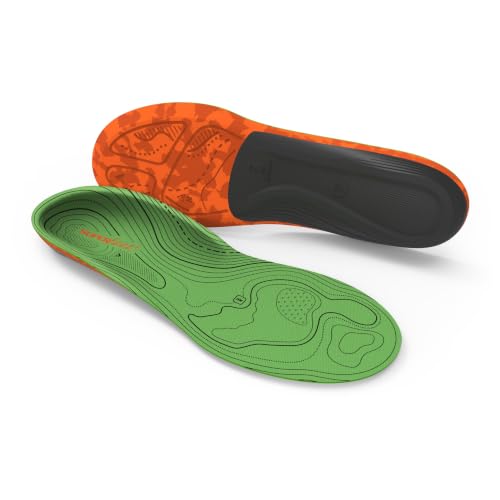
The verdict: the best insole for most hunting boots is the Superfeet Hike Support — a high arch profile built around a carbon fiber stabilizer, which is structural support rather than padding, and support is what a loaded pack on uneven ground actually asks for. It is the right pick for the hunter with a medium-to-high arch who walks in and stands still. The budget pick is the Superfeet Hike Cushion: the cheapest insole on this page, built for medium to high arches, and the softer-riding of the two Hike models. If your arch is genuinely medium, buy the CURREX HikeProinstead — it is the only medium-arch option here, and matching the profile matters more than the brand.
One honest framing first, because it changes what you shop for: none of these is sold as a hunting insole.Three are hiking insoles, one is a work-boot insole, one is an all-purpose insole. That is not a gap in this guide — it is the finding. There is no meaningful “hunting insole” category worth paying a premium for, because a hunting boot asks for exactly what a hiking boot asks for: arch support under load, on uneven ground, for hours. Buy the hiking insole that matches your arch and ignore anything marketed at hunters specifically.
The best hunting boot insoles at a glance
| Insole | Price & buy | Arch profile | Key structure | Published for | Best for |
|---|---|---|---|---|---|
| Superfeet Hike Support | $59.95Buy | High | Carbon fiber stabilizer | Hikers | Best overall |
| Superfeet Hike Cushion | $54.00Buy | Medium to high | Adaptive Comfort Technology | Hikers, long trails | Budget pick |
| CURREX HikePro | $59.95Buy | Medium | Shock absorbing; anti-slip heel surface | Hiking boots & shoes | Medium arches |
| Superfeet All-Purpose High Arch | $59.95Buy | High | Firm heel support | Active lifestyle, all-purpose | One pair, several boots |
| Superfeet Work ESD | $54.95Buy | Not stated as a profile | Heel impact cushioning; ESD | Safety toe work boots | Pac boots and work boots |
Prices shown are from Amazon as of November 8, 2026 and change often — the button always goes to the current listing. Some links may earn us a commission at no extra cost to you.
Read the arch column first and the price column second. Every one of these makers publishes an arch profile, which tells you they consider it the defining specification — and it is the only one of these specs that can make an insole actively worse for you rather than merely unnecessary.
There is no such thing as a hunting insole
Walk into a store and you will find insoles with camouflage printing and a hunter on the packet. Look at what is published about them and you will usually find less specification than on a hiking insole at the same price. Meanwhile the products that do publish arch profiles, stabilizer materials and intended use are sold to hikers and trades.
That is why this page recommends hiking insoles. A hunting boot’s job — hold the foot stable under a pack, on ground that is not flat, for longer than anyone enjoys — is the hiking-boot job with a rifle added. The one genuine hunting-specific variable is boot volume, which is why a work-boot insole appears in this list: a great many hunting boots are high-volume rubber pac boots whose internal shape is far closer to a work boot than to a trail shoe.
Arch height is the only spec that matters
If you take one thing from this page, take this. An insole with a higher arch than your foot does not give you more support — it gives you a pressure point. A high-arch insole under a low or neutral arch presses into the soft tissue of the arch with every step, and after six miles that is a hot spot rather than a benefit. Getting this backwards is the most common reason people try one pair of aftermarket insoles, hate them, and conclude insoles do not work.
So match the profile. Every pick here publishes one:
| High arch | Superfeet Hike Support (with a carbon fiber stabilizer); Superfeet All-Purpose High Arch Support (with firm heel support) |
|---|---|
| Medium to high arch | Superfeet Hike Cushion - the middle option, and the safest guess if you genuinely do not know where your arch sits |
| Medium arch | CURREX HikePro - the only medium-arch pick in this guide |
| Not published as an arch profile | Superfeet Work ESD, which is specified around heel impact cushioning and electrostatic dissipation for safety-toe boots rather than around an arch height |
The cheap way to find out which you are: step out of a shower onto a dry concrete floor or a flat piece of cardboard and look at the wet print. A print that shows most of the sole filled in means a low arch; a print that shows a narrow band or almost no connection between heel and forefoot means a high arch; somewhere in between is medium. It is a crude test, and it is good enough to keep you from buying the wrong profile — which is the only error here that costs you a hunt.
The volume mistake that ruins cold-weather boots
This is the part most insole guides leave out, and it matters more in hunting than in hiking. An insole takes up space inside the boot.A structured aftermarket insole is generally thicker and firmer than the foam sheet it replaces, so fitting one makes the boot effectively smaller — and you probably already sized that boot around a thick sock.
In cold weather that is not a comfort issue, it is a warmth issue. Circulation is what keeps toes warm; a boot laced tight over a thick sock and a thick insole restricts it, and the hunter who added an insole to be more comfortable ends up with colder feet on the stand than before. This is the single most common way a good insole makes a hunting boot worse.
The honest limitation on all of the above: none of these listings publishes an insole thickness or a weight, so you cannot predict the volume loss from the specification. You have to try it with your own boot and sock. That is worth knowing before you order rather than after.
A note on sizing before you order
Insoles are sold in size bands, and each of these products exists in several. The listings we link show one band each — US 9.5–11 men’s / 10.5–12 women’s for the four Superfeet models, and a medium-arch XL for the CURREX HikePro. Select your own size on the product page before adding to the cart; the price and availability shown here are for the linked band and other sizes may differ.
If you fall between bands, size to the larger one and trim. These insoles are designed to be trimmed down to the outline of the boot’s original insole, and trimming a size down is routine. Going the other way is not possible.
Best overall: Superfeet Hike Support
Best for:the hunter with a high or medium-to-high arch who carries a pack over uneven ground — Western hunts, long walk-ins, mountain boots.
This is our pick because of one published component: a carbon fiber stabilizer. That is a structural element rather than a cushioning one, and it is the correct answer for a hunting application. Padding feels nice in the store and compresses under load; a stabilizer resists the twist and collapse that happens when a loaded foot lands on a sidehill or a root, which is where fatigue and rolled ankles come from. Superfeet specifies it as an orthotic insert for hikers with high arch support, which is exactly the brief.
Pair it with the kind of boot it is designed to complement — see our mountain hunting boot guidefor the stiff, supportive end of the category — and it is the most useful upgrade available for the money.
The honest cuts: it is a high archinsole, so it is the wrong purchase if your arch is low or neutral, and that is not a small caveat — re-read the arch section before buying this one. Superfeet publishes no thickness or weight, so its effect on your boot’s internal volume is something you have to test. And a stabilizer-first insole is firmer underfoot than a cushioned one; if what you actually want is softness, buy the Hike Cushion.
Budget pick: Superfeet Hike Cushion
Best for: long days on your feet, hunters who want the softer ride, and anyone unsure where their arch sits.
The Hike Cushion is the cheapest insole on this page and the one we would hand to someone who has never used an aftermarket insole. Superfeet specifies it for medium to high arch support with Adaptive Comfort Technology, built for long trails. Two reasons it is the right budget pick rather than merely the cheap one: the medium-to-highprofile is the most forgiving band in this guide, so it is the lowest-risk guess if you have not worked out your arch; and “cushion” over “support” is the right bias for a hunt that is mostly walking on reasonable ground rather than sidehilling under weight.
For a hunter whose real complaint is “my feet ache at the end of the day” rather than “my arch collapses under a pack,” this is the better of the two Hike models and it costs less.
The honest cuts: a cushioned insole gives up some of the structural control the Hike Support provides, so if you are carrying serious weight on uneven ground the stabilizer is worth the upgrade. And cushioning generally means more material, so this is the pick most likely to cost you volume in an already-snug cold-weather boot. No thickness is published.
Best for medium arches: CURREX HikePro
Best for:hunters whose arch is genuinely medium — and the pick that matters most if the high-arch options have hurt you before.
The HikePro is here because it fills the one gap in the Superfeet line-up on this page: it is specified as a medium arch insole, and a correctly matched medium-arch insole beats a mismatched high-arch one from any brand. CURREX specifies it for hiking boots and shoes, as a shock absorbing insertintended to reduce fatigue, with an anti-slip heel surface for stability.
That heel surface is the detail worth calling out for hunting. An insole that slides inside a boot is a blister factory, and it is a particular problem in rubber-bottom boots where there is no textile lining for the insole to grip. If you have had an insole creep forward in a pac boot, an anti-slip heel is a direct answer to that.
The honest cuts: a shock-absorbing, fatigue-reducing design is a cushioning argument rather than a structural one, so it is not the pick for carrying heavy loads on steep ground — the Hike Support is. CURREX publishes no thickness or weight either. And the listing linked here is a specific size band and arch combination, so check both the size and that “medium arch” is what you want before ordering.
Best all-rounder: Superfeet All-Purpose High Arch Support
Best for: the high-arched hunter who wants one insole that works in hunting boots, work boots and everyday footwear.
This is the generalist, and its value is breadth rather than specialisation. Superfeet specifies it as an all-purpose, high arch support insole with firm heel support, for an active lifestyle. “Firm heel support” is the operative phrase: heel control is what stops the foot rolling inside the boot, and it is useful in any boot you stand in for hours, hunting or not.
Buy it if you want to buy once and move it between boots, or if you are testing whether structured insoles help you at all before committing to an activity-specific pair. For a hunter whose boots and work boots are the same kind of boot, this is the sensible single purchase.
The honest cuts: it is an all-purpose insole, which means it is not optimised for the hunting case the way the Hike Support’s stabilizer is — and it is a high arch product, so the same arch-matching warning applies. It is also not meaningfully cheaper than the Hike Support, so if the boots in question are hunting boots, buy the hiking insole instead.
Best for pac boots: Superfeet Work ESD
Best for: high-volume rubber pac boots, insulated work-style hunting boots, and safety-toe boots.
This pick exists because of the volume problem. Superfeet specifies the Work ESD for safety toe work boots, with heel impact cushioning and durable support, plus electrostatic dissipativeproperties. A work-boot insole is designed for the internal shape of a work boot — roomier, deeper, built around a sock-and-boot combination rather than a trail shoe — and that is exactly the shape of the rubber pac boots and insulated field boots a lot of hunters actually wear.
The heel impact cushioning is the right feature for the application too. A pac boot is worn standing on hard, cold ground or on a treestand platform far more than it is worn running, and heel fatigue from standing still is the complaint it addresses. If your boots are the insulated rubber kind, see our boot insulation guide for how insole volume interacts with insulation ratings.
The honest cuts: the ESD property is irrelevant to hunting— it is an industrial safety feature and you are not paying for anything useful there, so do not read it as a premium. Superfeet publishes no arch profile for this model, which makes it the hardest pick here to match to your foot in advance. Buy it for boot volume, not for arch support; if you need arch support in a roomy boot, the Hike Support with a trim is the better answer.
When an insole is not the fix
We would rather you kept the money than spent it on the wrong thing, so: there are three foot problems an insole does not solve, and in each case there is a better first move.
- The boot is the wrong size or the wrong shape. An insole cannot fix a boot that is too narrow, too short, or built on a last that does not match your foot. If your complaint is pinching at the ball of the foot or a heel that moves no matter how you lace it, the boot is wrong. Our wide-feet boot guide covers the most common version of this.
- The boot is not broken in. A stiff new boot causes most of the discomfort people buy insoles to fix, and the insole gets credit or blame for what break-in was going to do anyway. Work through our boot break-in guide first.
- Cold feet.An insole is not insulation, and — as covered above — a thick one can make cold feet worse by restricting circulation. If the problem is temperature, the answers are sock choice, boot insulation and supplemental heat, not a footbed.
Where an insole genuinely earns its money: your boots fit and are broken in, your arch is medium-to-high, and your feet still ache by mid-afternoon under a pack. That is the complaint a shaped, stabilized footbed actually addresses.
The bottom line
Work out your arch first, then buy on the profile. For a high or medium-to-high arch under a pack, buy the Superfeet Hike Support for its carbon fiber stabilizer. For the cheapest sensible upgrade, or if you are not sure where your arch sits, buy the Superfeet Hike Cushion on its forgiving medium-to-high profile. For a genuinely medium arch, buy the CURREX HikePro. For one pair to move between hunting and work boots, the All-Purpose High Arch. And for a roomy rubber pac boot, the Work ESD— bought for its boot-shaped volume, not for the ESD rating.
Then fit it the way you will hunt in it: stock insole out, hunting sock on, boot laced, toes still able to move. Nobody publishes the thickness of these things, so that check is the only way to know — and skipping it is how a good insole turns into cold feet.
Frequently asked questions
What are the best insoles for hunting boots?
For most hunters, the Superfeet Hike Support: a high arch profile built around a carbon fiber stabilizer, which gives structural support rather than padding - the right answer for carrying a pack over uneven ground. The Superfeet Hike Cushion is the budget choice and the most forgiving profile (medium to high), so it is also the safest pick if you do not know where your arch sits. If your arch is genuinely medium, the CURREX HikePro is the only medium-arch option here and a matched medium insole beats a mismatched high-arch one from any brand.
Are there insoles made specifically for hunting?
Products marketed that way exist, but they generally publish less specification than hiking insoles at the same price, and there is no performance reason to prefer them. A hunting boot's job is the hiking boot's job with a pack and a rifle added: hold the foot stable under load, on uneven ground, for hours. So buy a hiking insole matched to your arch. The one genuinely hunting-specific variable is boot volume, which is why a work-boot insole is worth considering if you wear high-volume rubber pac boots.
Can an insole make my hunting boots too tight?
Yes, and this is the most common way a good insole makes a hunting boot worse. A structured insole is thicker and firmer than the foam sheet it replaces, so it makes the boot effectively smaller - and you probably already sized that boot around a thick sock. In cold weather that becomes a warmth problem rather than a comfort one, because restricted circulation means colder toes. Always remove the stock insole rather than stacking on top of it, fit the new insole with your actual hunting sock, and check you can still wiggle your toes with the boot laced the way you hunt. None of these makers publishes an insole thickness, so that physical check is the only way to know.
How do I know if I need a high arch or medium arch insole?
Match the insole to your foot, because a higher arch than yours creates a pressure point rather than more support - which is why many people try one pair, hate them, and conclude insoles do not work. The quick test: step out of a shower onto dry concrete or flat cardboard and look at the wet print. Mostly filled in means a low arch; a narrow band or almost no connection between heel and forefoot means a high arch; in between is medium. It is crude but good enough to stop you buying the wrong profile. If you are still unsure, the Superfeet Hike Cushion's medium-to-high band is the most forgiving choice here.
Should I trim insoles to fit my boots?
Yes - these are designed for it. Take the boot's original insole out and use it as a template, then trim the new insole to that outline. If you fall between size bands, buy the larger band and trim down; you cannot go the other way. Note that the listings linked on this page each show one size band (US 9.5-11 men's / 10.5-12 women's for the Superfeet models, a medium-arch XL for the CURREX), so select your own size on the product page before ordering.
Will insoles keep my feet warmer in a treestand?
No, and a thick one can make things worse. An insole is not insulation, and adding bulk inside a boot you already sized for a heavy sock restricts circulation - which is what actually keeps toes warm on a long sit. If cold feet are the problem, the answers are sock choice, the boot's insulation rating and supplemental heat, not a footbed. Buy an insole to fix aching arches under load, which is the complaint it genuinely addresses.
Sources
- Superfeet Hike Support - published listing specification (high arch, carbon fiber stabilizer)
- Superfeet Hike Cushion - published listing specification (medium to high arch, Adaptive Comfort Technology)
- Superfeet All-Purpose High Arch Support - published listing specification (high arch, firm heel support)
- Superfeet Work ESD - published listing specification (safety toe work boots, heel impact cushioning, ESD)
- CURREX HikePro - published listing specification (medium arch, shock absorbing, anti-slip heel surface)
Keep reading
Gearing up before your next hunt?
See how we evaluate gear, then dig into the reviews and buying guides — written without inventory to sell.