Head to Head
Synthetic vs Down Sleeping Bags: Pick on Moisture, Not Price
Down is lighter, smaller and lasts longer. Synthetic keeps working wet and costs less. Which one is right has almost nothing to do with how cold it gets and almost everything to do with how wet it gets.
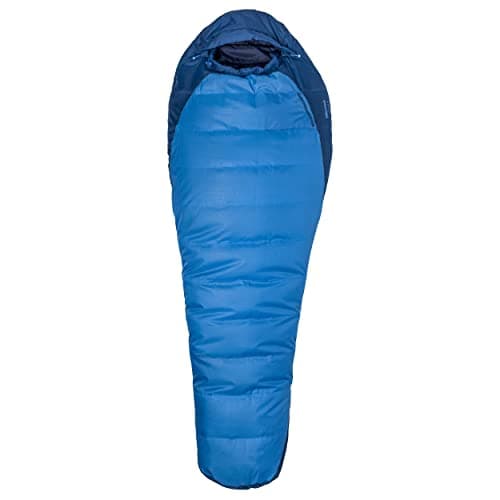
Buy synthetic if your trips involve rain, condensation, boats, coastal weather or a shelter you do not fully trust — synthetic fill keeps insulating when damp, and the Marmot Trestles Elite Eco 20 is the workhorse version of that. Buy down if you are carrying the bag a long way in dry conditions, where the Kelty Cosmic Down 20 gives real 550-fill warmth at roughly 2 pounds 10 ounces for a fraction of premium money.
That is the whole decision. Everything below is the evidence for it, because the trade is usually argued on weight when it should be argued on water.
The short verdict
| Down wins on | Warmth-to-weight and compressibility - the best of both made - plus lifespan. Quality down outlasts synthetic fills by years |
|---|---|
| Synthetic wins on | Wet performance, drying speed, tolerance of careless storage, price, and allergy concerns |
| The real tiebreaker | Moisture exposure. Soaked down clumps and stops insulating; damp synthetic keeps working. A hydrophobic finish on down delays wet-out - it does not defeat it |
| The cost of choosing synthetic | Bulk. A synthetic bag of equal warmth is heavier and packs larger, and the fill slowly loses loft with repeated compression |
| The cost of choosing down | Price, and care. Down needs dry storage, uncompressed, and a washing routine most people get wrong |
Head to head on the properties that matter
| Down | Synthetic | |
|---|---|---|
| Warmth for the weight | Best available - nothing matches it | Heavier for the same rating |
| Packed size | Compresses smallest | Bulky even in good designs |
| When it gets wet | Clumps and stops insulating | Keeps insulating while damp |
| Drying time | Slow - hours in the field, often impossible | Fast |
| Lifespan | Years longer with proper care | Loft slowly fades with repeated compression |
| Storage tolerance | Must be stored dry and uncompressed | Forgiving of careless storage |
| Price for a given rating | Higher | Lower |
| Allergy considerations | Can be an issue | None |
Prices move constantly; every number on this page comes from the live price checks below, stamped with the date captured.
Moisture: the only argument that really decides it
Down insulates by trapping air in lofted plumes. Soak it and the plumes collapse, the air goes, and the bag stops being a bag — you are inside a damp sack. That is why almost all modern down is treated with a hydrophobic finish, and it is important to be precise about what that finish does: it delays wet-out. It does not defeat it.
Synthetic fill is a mat of fibres that holds its structure wet. It will feel clammy and it will be less warm, but it keeps insulating, and it dries in a fraction of the time. On a canoe trip, a coastal hunt, a Pacific Northwest week, or any trip where a tent might get a soaking, that is not a nice-to-have. It is the difference between an uncomfortable night and a dangerous one.
Warmth to weight, and what fill power means
Fill power — 550, 650, 850 — measures loft per ounce. Higher numbers mean lighter, more packable warmth at higher cost. It is not a temperature rating: a 550-fill bag and an 850-fill bag can carry the same comfort rating, and the 850 one will simply weigh less and pack smaller to get there.
The gap in practice is large. A 550-fill down bag rated around 32F comfort weighs roughly 2 pounds 10 ounces; an 850+ fill bag in a similar class is published at 1 pound 10 ounces. A recycled synthetic bag of broadly the same rating runs 3 pounds 8 ounces with a packed size near 9.5 by 19 inches. For a weekend car camp that difference is invisible. For a multi-day pack-in it is the whole argument.
Lifespan and care
This one usually gets left out and it should not. Quality down outlasts synthetic fills by years. Synthetic loft slowly fades with repeated compression — the bag is not broken, it just rates a few degrees warmer than it used to, and there is no fixing it. A down bag that is washed correctly and stored uncompressed in a large cotton sack can be good for a decade or more.
So the honest framing of the price difference is not “down costs more.” It is “down costs more up front and may cost less per year, provided you look after it.” If you know you will stuff the bag into a compression sack and leave it there until next season, buy synthetic and spend the difference on a better pad.
Read the comfort rating, not the number on the bag
Whichever fill you choose, this is the specification people get wrong. Bags carry up to three temperatures and only one of them is useful for shopping:
| Comfort | The temperature at which a cold sleeper (test standard: an average woman) sleeps comfortably in a relaxed posture. This is the number to buy on |
|---|---|
| Lower limit | The temperature at which a warm sleeper (test standard: an average man) can sleep curled up without waking from cold. Usually what the name on the bag refers to |
| Extreme | A survival number - hypothermia-risk territory. Ignore it when shopping |
A bag called a “20 degree” bag is typically rated around 30-32F comfort and 20-21F limit. And no bag of either fill works without insulation underneath you: ground conduction is where most cold nights actually come from. Put half your attention on the sleeping pad and its R-value.
Best synthetic: Marmot Trestles Elite Eco 20
Who it is for: canoe campers, coastal and Pacific Northwest trips, beginners, and anyone who would rather not baby their gear.
Recycled synthetic fill that keeps insulating when damp, a durable shell, and a temperature rating reviewers describe as dependable rather than optimistic. OutdoorGearLab and CleverHiker both keep it on their lists as the synthetic workhorse, and it asks none of the storage care down demands.
Honest cons: at a published 3 pounds 8 ouncesand a packed size near 9.5 by 19 inches it is bulky even by synthetic standards — a real cost in a small pack. And like all synthetics, its loft will slowly fade over years of compression where down would soldier on.
Best synthetic for side sleepers: NEMO Forte Endless Promise 20
Who it is for: car campers and short-haul trippers who sleep on their side and want one affordable, forgiving bag.
A spoon shape executed in recycled synthetic insulation: roomy where you bend, damp-tolerant, machine-manageable, with repair-and-recycle Endless Promise construction and Thermo Gill vents for warm nights.
Honest cons: it is in the 3-pound class and packs big, so it is a marginal choice for long backpacking miles. Backpackers should pay up for a down bag or slim down to an ultralight.
Best value down: Kelty Cosmic Down 20
Who it is for: first-bag buyers and budget-minded backpackers who want real down warmth without a premium spend, in a dry climate.
Real 550-fill hydrophobic down, a temperature rating independent testers repeatedly call accurate (comfort around 32F, limit around 21F), a smooth liner fabric reviewers single out, and roughly 2 pounds 10 ounces— entirely carryable for weekend and moderate backpacking.
Honest cons: 550-fill means it packs bigger and weighs more than 800-fill bags, the cut is a fairly standard mummy, and the zipper can snag. It is still down, so it needs dry storage and it will fail you if it gets soaked.
Best ultralight down: Sea to Summit Spark 15
Who it is for: the backpacker counting ounces on a dry-weather route who does not want to go to a quilt.
Premium 850+ fill-power down in a published 1 pound 10 ounce package that compresses to almost nothing, with a slim-but-not-punishing 61-inch shoulder girth and a liner fabric testers describe in near-luxury terms.
Honest cons: it is the most expensive bag on this page by a wide margin, the slim cut is not for restless sleepers, and high fill power buys you nothing at all if the bag gets wet — the lighter and loftier the down, the more you have to lose.
Pick this if...
| If you... | Buy | Why |
|---|---|---|
| Camp in rain, on the coast, or from a canoe | Synthetic - Trestles Elite Eco 20 | It keeps insulating damp and dries fast; down does neither |
| Are buying a first bag | Synthetic - Trestles Elite Eco 20 | Cheaper, forgiving of bad storage, and it will not punish a beginner's mistake |
| Car camp and sleep on your side | Synthetic - NEMO Forte 20 | The spoon shape is worth more to your sleep than any fill argument |
| Backpack weekends in a dry climate | Down - Kelty Cosmic Down 20 | Real down warmth at roughly 2 lb 10 oz for a fraction of premium money |
| Count ounces on long dry routes | Down - Sea to Summit Spark 15 | 1 lb 10 oz published, and it packs to almost nothing |
| Hunt early-season spike camps | Down, with a shelter that vents | Pack size wins, provided condensation is managed |
| Will stuff the bag in a compression sack all year | Synthetic | Down's lifespan advantage only exists if you store it uncompressed and dry |
Check the Marmot Trestles Elite Eco 20 price on Amazon. Whichever fill you pick, pair it with a pad whose R-value suits the season — see best sleeping pads and the full sleeping bag roundup.
Frequently asked questions
Is a synthetic or down sleeping bag better?
Neither outright - it depends on moisture. Down has the best warmth-to-weight ratio and compressibility made and lasts years longer, but soaked down clumps and stops insulating. Synthetic keeps insulating when damp, dries fast, costs less and tolerates careless storage, at the price of extra bulk and weight. Pick on how wet your trips get, not on how cold.
Does hydrophobic down work when it gets wet?
It delays wet-out rather than defeating it. A hydrophobic finish buys you time in damp conditions and makes drying faster, but a genuinely soaked hydrophobic down bag still collapses and stops insulating. If soaking is a realistic possibility on your trip, that argues for synthetic fill.
What does fill power mean on a down sleeping bag?
Fill power - 550, 650, 850 - measures loft per ounce. Higher numbers mean lighter, more packable warmth at higher cost. It is not a temperature rating: a 550-fill and an 850-fill bag can share the same comfort rating, with the 850 one simply weighing less and packing smaller to get there.
How much heavier is a synthetic sleeping bag?
Roughly a pound heavier than a value down bag of similar rating, and close to two pounds heavier than a premium ultralight. A recycled synthetic 20-degree bag runs about 3 pounds 8 ounces; a 550-fill down bag of similar rating is about 2 pounds 10 ounces; an 850+ fill ultralight is published at 1 pound 10 ounces. Packed size follows the same order.
Do synthetic sleeping bags wear out faster?
Yes. Synthetic loft slowly fades with repeated compression, so the bag gradually rates a few degrees warmer than it did when new, and there is no fixing it. Quality down outlasts synthetic fills by years - but only if it is stored dry and uncompressed, which is a habit a lot of owners do not keep.
What temperature rating should I buy?
Buy on the comfort rating, not the number in the bag's name. Comfort is the temperature at which a cold sleeper rests comfortably; lower limit is where a warm sleeper can sleep curled up without waking; extreme is a survival figure to ignore. A bag sold as a '20 degree' bag is typically around 30-32F comfort.
Sources
- Marmot Trestles Elite Eco 20 published specifications (3 lb 8 oz, packed size near 9.5 x 19 in) and its standing on OutdoorGearLab and CleverHiker synthetic lists
- Kelty Cosmic Down 20 published specifications (550-fill hydrophobic down, ~2 lb 10 oz, comfort ~32F / limit ~21F)
- Sea to Summit Spark 15 published specifications (850+ fill power, 1 lb 10 oz, 61 in shoulder girth)
- EN/ISO sleeping bag rating definitions (comfort, lower limit, extreme) as applied in our sleeping bag roundup
- Prices, product images and availability via the Amazon Creators API price layer, refreshed daily
Keep reading
Gearing up before your next hunt?
See how we evaluate gear, then dig into the reviews and buying guides — written without inventory to sell.