Buying Guide
Best Crossbow Scopes Under $100
A crossbow scope is a ranging device, not just a sight: its stacked marks are calibrated to a speed window, and outside that window they point at nothing useful. That single spec sorts this price band - and half the scopes in it do not publish one.
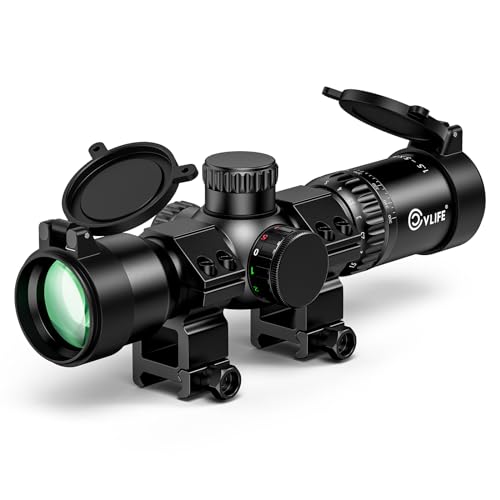
The verdict: the best crossbow scope under $100 is the CVLIFE 1.5-5x32 Rangefinder— it publishes a speed calibration of 300 to 460 fps, which is the widest and fastest window in this band and the only one that covers a modern flagship crossbow, and it ships with 20mm rings. If you want a name you recognize, the TRUGLO 4x32 Illuminated is the pick and also includes rings. If your crossbow is older or slower, the UUQ 1.5-5x32 is calibrated from 250 fps, which the others are not. And the budget pick, the non-illuminated TRUGLO 4x32, is the cheapest scope here and still ships with rings — so it is also the cheapest way to get an optic actually mounted.
Here is the framing that makes this band worth its own page rather than a cheaper slice of our full crossbow scope guide: a crossbow scope is a ranging instrument, and in this price band the specification that makes it one is frequently not published. Three of the six scopes here publish a speed-calibration range. Three do not. That is the single most important thing to know before you spend $60 on an optic, and it is the spine of this page.
The best crossbow scopes under $100 at a glance
| Scope | Price & buy | Magnification | Published speed range | Rings included? | Best for |
|---|---|---|---|---|---|
| CVLIFE 1.5-5x32 Rangefinder | $99.99Buy | 1.5-5x32 variable | 300-460 fps | Yes - 20mm | Best overall |
| TRUGLO 4x32 Illuminated | $77.36Buy | 4x32 fixed | Not published | Yes | Best known brand |
| UUQ 1.5-5x32 | $79.99Buy | 1.5-5x32 variable | 250-450 fps | Yes - 20mm | Slower crossbows |
| CVLIFE 1.5-5x32 | $79.99Buy | 1.5-5x32 variable | 300-450 fps | Not published | Also considered |
| CVLIFE 4x32 | $52.99Buy | 4x32 fixed | Not published | Yes - 20mm mounts | Best fixed power |
| TRUGLO 4x32 BDC/Rangefinder | $45.68Buy | 4x32 fixed | Not published | Yes | Budget pick |
Prices shown are from Amazon as of November 21, 2026 and change often — the button always goes to the current listing. Some links may earn us a commission at no extra cost to you.
Every scope here had a live, buyable price under $100 when we built this page — that is the only rule we use for a price-band page. Two optics that belong in the full guide sit above the line and are covered at the end as the tier above: the Hawke XB1 and the Vortex Crossfire II crossbow kit.
The one spec that decides it: the published speed range
A crossbow scope’s reticle is not a crosshair with decoration. The stacked lines or circles below the center are holdover marks at fixed yardages, and they are drawn for a bolt flying at a particular speed. Change the speed and the drop changes, so the mark that said 40 yards now says something else.
That is why a published speed-calibration range is the specification that matters most here, and it is why we ranked this page on it:
| CVLIFE 1.5-5x32 Rangefinder | Published 300-460 fps. The only scope in the band whose published range reaches a modern flagship's speed - our fastest-crossbows roundup lists current models well past 450 fps. |
|---|---|
| UUQ 1.5-5x32 | Published 250-450 fps. The widest window here and the only one that starts low enough for an older recurve crossbow or an entry-level compound model. |
| CVLIFE 1.5-5x32 (the cheaper one) | Published 300-450 fps. Covers the great majority of current crossbows but not the fastest ones. |
| Both TRUGLO 4x32s and the CVLIFE 4x32 | No speed range published on the listing. The reticle is described as a BDC or rangefinder reticle, but the speed it is drawn for is not stated, so you cannot confirm it matches your crossbow before you buy - you have to establish it at the target. |
One thing to be clear about regardless of which you buy: your crossbow is probably not shooting the speed printed on the box. Advertised speeds come from the maker’s own test bolt at the light end of what the bow will shoot, so a heavier hunting bolt with a broadhead is slower than the number on the package. That gap is exactly the size that moves a 40-yard mark, which is why every crossbow scope has to be verified at the target rather than trusted out of the box. Our sight-in guide has the protocol.
What $100 buys - and what it does not
The good news is real, and it is better than it was ten years ago. Under $100 you can buy a multi-coated 32mm crossbow scope with an etched-glass ballistic reticle, red and green illumination, and the rings to mount it — and etched glass matters, because a wire reticle is the part that breaks under a crossbow’s shock pulse. At twenty to fifty yards, which is where crossbows are actually shot, that is genuinely enough optic.
Here is the honest list of what the band does not buy:
- A published warranty. Not one scope on this page publishes a warranty term. The step up is stark: the Vortex Crossfire II crossbow kit publishes an unlimited, unconditional warranty, and on an optic mounted to a machine that generates the shock a crossbow does, a warranty is a real feature rather than paperwork.
- Published fogproof and waterproof construction. The Hawke XB1 publishes fogproof, waterproof optics and a 1-inch mono-tube body, a little above the top of this band. None of the sub-$100 scopes states nitrogen purging or a sealing standard. A scope that fogs internally on a cold damp morning is unusable on exactly the morning you wanted it.
- A named glass or coating specification.You get “etched glass” and “illuminated” and that is close to all. Light transmission, coating stack and eye relief are not published by anyone in this band.
- A brand with an optics track record, mostly. Four of the six picks here are value-tier brands. TRUGLO is the exception and the reason both of its scopes are on the page despite publishing less about the reticle than CVLIFE does about its own.
What the band does buy that matters: a scope on the bow today. A crossbow with a cheap working scope that you practice with beats a crossbow waiting for a scope you are saving up for, and it beats a bare rail by an enormous margin.
The second-focal-plane trap on variable scopes
This is the section we would want to read before buying, because it inverts the obvious assumption that a variable scope is a better scope.
Crossbow scopes in this class are second focal planedesigns — the Vortex crossbow kit states it explicitly in its own product name, and the architecture is the same across the category. In a second-focal-plane scope the reticle is etched behind the magnification assembly, so the reticle stays the same visual size while the target grows and shrinks as you zoom. The consequence for a crossbow is specific and important: the holdover marks are only correct at one magnification setting. Zoom away from it and the spacing between the marks no longer matches the yardages they represent.
So on a 1.5-5x32 scope, the practical reality is that you pick one power, verify your marks at it, and leave the ring alone for the rest of the season. Which raises an honest question: if you are going to use one magnification, what did the variable buy you?
| Buy variable if | You hunt both tight timber and open fields and genuinely want 1.5x for a close, fast shot in cover. Just accept that you must verify your marks at your chosen hunting power and resist touching the ring in the moment. |
|---|---|
| Buy fixed 4x if | You want the reticle to be right every single time you raise the bow. There is no ring to be in the wrong place, and 4x is a sensible crossbow power - enough magnification to aim precisely at 50 yards, little enough that the field of view stays usable at 20. |
| The quiet advantage of fixed | Fewer moving parts in an optic bolted to a machine that slams. The zoom assembly is a mechanism, and mechanisms are what shake loose. Both TRUGLO picks and the CVLIFE 4x32 are fixed. |
This is the reason our budget pick is a fixed-power scope rather than the cheapest variable one. At this price, simpler is not a compromise.
Rings included is a price, not a feature
Easy to overlook and it changes the ranking. A crossbow scope has to be clamped to a Picatinny or 20mm rail, and rings are not free. Five of the six scopes here publish rings or mounts in the box; the cheaper CVLIFE 1.5-5x32 does not, which is why we list it rather than rank it even though its published speed range beats both TRUGLOs.
Run the comparison on the mounted price rather than the sticker. The non-illuminated TRUGLO 4x32 is the cheapest scope on this pageand it includes rings, which is why it is the budget pick rather than the cheapest-looking listing: on an optic you still have to clamp to a rail, rings in the box are a discount.
While you are at it: do not mount it dry and do not guess the torque. A scope that walks its zero under crossbow shock is usually a mounting problem rather than an optic problem, and our scope mounting tool guidecovers the torque driver and ring lapping side of that. The same logic applies on the airgun side of the site, where recoil is different but the mounting discipline is identical — see our air rifle scope mount guide.
Best overall: CVLIFE 1.5-5x32 Rangefinder
Best for: a current-generation crossbow, including a fast one, on a budget.
This is the scope to buy in the band, and the case is the published speed range. CVLIFE states 300 to 460 fps calibration, a 20 to 100 yard rangefinder ballistic reticle on etched glass, red and green illumination, and 20mm scope rings in the box. The 460 fps figure is what separates it: current flagship crossbows advertise speeds well above 450 fps, and this is the only optic in the band whose published window reaches them.
The 20-to-100-yard rangefinding grid is a secondary nicety rather than the main event. It works by apparent target size, which is a crude method, but on a crossbow where almost every shot is inside 50 yards it is a usable sanity check when you have no rangefinder in hand. If you take ranging seriously, buy a rangefinder — we cover the sub-$200 tier separately.
Honest cons:it is the most expensive scope on this page, right at the top of the band, so a single price move takes it out. CVLIFE publishes no warranty term, no light-transmission figure, no eye relief and no fogproof or waterproof rating — the band-wide gaps apply to the top pick too. It is a second-focal-plane variable, so the holdovers are only right at one magnification, as above. And it is a value-tier brand without an optics heritage, which is a real consideration on a part you are trusting with a shot.
Best known brand: TRUGLO 4x32 Illuminated
Best for: a buyer who would rather have a recognized archery name than a published spec sheet.
TRUGLO has been making archery sights and optics for a long time, and that counts for something in a band where the alternative is brands with no history. This is the 4x32mm compact crossbow scope with an illuminated BDC/rangefinder reticle and scope rings included.
Being fixed 4x is a genuine point in its favor for the reasons in the second-focal-plane section: there is no magnification ring to leave in the wrong place, so whatever your marks turn out to mean, they mean it every time you raise the bow. Illumination earns its keep at the two times of day crossbow hunters actually shoot — a black reticle disappears against a deer in low light.
Honest cons: TRUGLO publishes no speed-calibration range on this listing, which means the brand with the best name here gives you less of the one spec that matters than CVLIFE does. No warranty term, no fogproof or waterproof statement, no glass specification either. At 4x fixed there is no low-power option for a close shot in thick cover. And it costs more than the identical non-illuminated version, so you are paying specifically for the illumination — worth it for low light, not worth it if you only shoot midday.
Best for a slower bow: UUQ 1.5-5x32
Best for:an older, slower or entry-level crossbow — the case the rest of this band ignores.
The UUQ is here for one specific and valuable reason: it publishes a calibration range of 250 to 450 fps, and 250 is the lowest floor in the band. Every other scope here that publishes a range starts at 300. If you shoot a recurve crossbow, an older compound model or a youth-weight bow, the cheaper CVLIFE’s 300 fps floor may sit above your actual bolt speed — and a reticle calibrated faster than your bow means every mark shoots high.
It also publishes circles and a rangefinder etched-glass ballistic reticle, red and green illumination, a 20 to 100 yard grid and 20mm scope rings— the same feature set as the top pick, shifted down the speed scale.
Honest cons:its 450 fps ceiling does not cover the fastest current crossbows, so it is the wrong end of the range for a flagship — buy the CVLIFE Rangefinder for those. UUQ publishes no warranty, no fogproof or waterproof rating and no glass specification. Stock on these listings moves, and availability was not stated when we checked, so confirm it is buyable in the configuration you want. And it is a second-focal-plane variable with the same one-magnification constraint as the others.
Also considered: CVLIFE 1.5-5x32 (300-450 fps)
This is the cheaper of CVLIFE’s two variable scopes, and it is a straightforward proposition: a 1.5-5x32 with a 20 to 100 yard ballistic reticle, red and green illumination and a published 300 to 450 fpscalibration — a real published range, which already puts it ahead of both TRUGLOs on the spec that counts.
We are listing it rather than ranking it for one concrete reason: its listing does not state that rings are included, where the top pick, the UUQ and both TRUGLOs do. Add rings and the gap to the better-specified Rangefinder model narrows to very little, and the Rangefinder covers faster bows. If you already have rings on hand, this is a sensible buy with a real published speed range behind it; if you do not, buy one of the scopes that comes with them.
Best fixed power: CVLIFE 4x32
Best for: a scope whose reticle cannot be in the wrong place, from the value tier.
The CVLIFE 4x32 is the cheapest variable-free optic from the value brands here, and being fixed power is the point rather than a compromise. CVLIFE publishes red and green illumination, circles and a rangefinder etched glass reticle, a 20 to 100 yard grid and 20mm mounts.
Spend a moment on the argument, because it is the opposite of how people usually shop. On a second-focal-plane crossbow scope the holdovers are only true at one magnification. A fixed 4x has no magnification ring, so there is nothing to get wrong, nothing to drift under recoil, and one less mechanism in an optic strapped to a machine that delivers a violent shock on every shot. For a hunter who shoots inside 50 yards, that is a better trade than a zoom ring they are told not to touch.
Honest cons: no published speed range, so you must establish what each mark means at the target — the same job as both TRUGLOs. No warranty, fogproof or glass specification. No low-power setting for a close shot in thick cover, which is the real cost of fixed 4x. And at the prices on the buttons today the non-illuminated TRUGLO undercuts it while also including rings and carrying an archery brand behind it, so check both numbers before you decide.
Budget pick: TRUGLO 4x32 BDC/Rangefinder
Best for: the lowest mounted cost from a recognized archery brand.
This is the non-illuminated version of the TRUGLO above: the same 4x32mm compact body with a BDC/rangefinder reticle and scope rings included, for meaningfully less money. It is the cheapest scope on this page outright, and with rings in the box it is the cheapest route onto the rail by a wider margin than the sticker suggests.
It is the right pick if you shoot in reasonable light, or if this is a second bow, a loaner or a crossbow you are getting a new hunter started on. Pair it with a beginner-friendly crossbow and a cheap target and you have a complete setup for very little.
Honest cons:no illumination, and that is a real limitation rather than a preference — a black reticle against a dark deer in the last ten minutes of legal light is genuinely hard to use, and those ten minutes are when a lot of deer get shot. Like its illuminated sibling it publishes no speed range, no warranty and no weatherproofing specification. Fixed 4x with no low-power option. And it is an old listing in a category that has moved on, so check it is still the current version before ordering.
The bottom line
Buy the CVLIFE 1.5-5x32 Rangefinderif your crossbow is current or fast, because its published 300-to-460 fps window is the only one in the band that reaches a flagship’s speed and it comes with rings. Buy the UUQ 1.5-5x32 if your bow is slower than 300 fps, because nothing else here is calibrated for it. Buy a TRUGLO if you want a recognized archery brand, and accept that you will establish your own yardage marks at the target. And take the non-illuminated TRUGLO 4x32 if you want to spend the least, or the CVLIFE 4x32if you want a fixed 4x with illumination — either way you get a reticle that is always in the same place rather than a zoom ring you are told not to touch.
Then be honest about the ceiling of the band. Nothing on this page publishes a warranty or a fogproof and waterproof rating, and on an optic mounted to a crossbow those are the two things that decide whether it is still working in three seasons. The step up is not enormous — the Hawke XB1 publishes fogproof, waterproof construction, a 1-inch mono-tube and calibration from 250 to 425 fps, and the Vortex Crossfire II crossbow kit ships with rings, flip caps and a cover behind an unlimited, unconditional warranty. If you hunt hard weather or you intend to own the scope for a decade, the full crossbow scope guide is the right page.
Frequently asked questions
What is the best crossbow scope under $100?
The CVLIFE 1.5-5x32 Rangefinder. It publishes a speed calibration of 300 to 460 fps, which is the only published window in the band that reaches the speed of a current flagship crossbow, and it ships with 20mm rings so the listed price is the price of a mounted scope. The UUQ 1.5-5x32 is the pick for a slower bow because it is calibrated from 250 fps, and the CVLIFE 4x32 is the budget pick - fixed power, so the reticle spacing cannot be thrown off by a zoom ring in the wrong place.
Does a crossbow scope have to match my crossbow's speed?
Yes, and it is the most important thing to check. The stacked lines or circles below the center crosshair are holdover marks at fixed yardages, drawn for a bolt traveling at a particular speed - change the speed and the drop changes, so the mark that claims 40 yards points somewhere else. Three of the six scopes on this page publish a calibration range and three do not. A scope with no published range still works, but you have to establish what each mark actually means by zeroing at 20 yards and shooting each one. Remember that advertised crossbow speeds come from the maker's own light test bolt, so a heavier hunting bolt with a broadhead flies slower than the box figure.
Is a fixed 4x or a variable crossbow scope better?
For most crossbow hunters, fixed 4x. Crossbow scopes in this class are second focal plane designs, which means the reticle stays the same visual size while the target changes as you zoom - so the holdover marks are only correct at one magnification setting. On a variable scope you therefore pick one power, verify your marks at it, and leave the ring alone, which raises the question of what the variable bought you. A fixed 4x has no ring to be in the wrong place, one less mechanism to shake loose under crossbow shock, and 4x is enough to aim precisely at 50 yards while keeping a usable field of view at 20. Buy variable only if you genuinely want 1.5x for close shots in thick cover.
Do crossbow scopes come with rings?
Usually, but not always, and it changes which one is actually cheapest. Five of the six scopes on this page publish rings or 20mm mounts in the box; the cheaper CVLIFE 1.5-5x32 does not state that it includes them. Always compare the mounted cost rather than the sticker price - the non-illuminated TRUGLO 4x32 includes rings and works out cheaper mounted than a scope listed a few dollars lower without them. Mount it with a torque driver rather than by feel, because a scope that loses its zero under crossbow shock is usually a mounting problem rather than an optic problem.
What do you give up on a crossbow scope under $100?
Four things, and they are all disclosure or durability rather than aiming performance. No scope on this page publishes a warranty term, where the Vortex Crossfire II crossbow kit publishes an unlimited, unconditional one. None publishes fogproof or waterproof construction, where the Hawke XB1 does at around $160 - and a scope that fogs internally on a cold damp morning is unusable on exactly the morning you wanted it. None publishes a glass, coating or eye-relief specification. And four of the six are value-tier brands without an optics track record. At 20 to 50 yards the band aims well; the open question is how long it lasts.
Can you use a rifle scope on a crossbow?
You can mount one, but you should not plan on it. A crossbow scope's reticle is a yardage tool calibrated to bolt speed, with marks stacked for 20, 30, 40 and 50 yards, because a bolt drops far more steeply than a bullet over those distances - a rifle duplex reticle gives you no holdover reference at all inside 50 yards. Crossbow scopes also set their parallax for short range, and they are built for a shock pulse that is different in character from rifle recoil. Buy a crossbow-specific scope; at the prices on this page there is no reason to improvise.
Sources
- CVLIFE 1.5-5x32 Crossbow Scope with Rangefinder Ballistic Reticle - published listing specification (300-460 fps, 20-100 yards, red/green illuminated, 20mm rings)
- TRUGLO 4x32mm Compact Crossbow Scope, Illuminated BDC/Rangefinder - published listing specification (scope rings included)
- UUQ 1.5-5x32 Crossbow Scope - published listing specification (250-450 fps, etched glass ballistic reticle, 20-100 yards, 20mm rings)
- CVLIFE 1.5-5x32 Crossbow Scope - published listing specification (300-450 fps, 20-100 yards, red/green illuminated)
- CVLIFE 4x32 Crossbow Scope - published listing specification (red/green illuminated, etched glass reticle, 20-100 yards, 20mm mounts)
- TRUGLO 4x32mm Compact Crossbow Scope, BDC/Rangefinder - published listing specification (scope rings included)
- Hawke XB1 1.5-5x32 Crossbow Scope - published listing specification (calibrated 250-425 fps, 1-inch mono-tube, capped low-profile turrets, fogproof, waterproof), cited as the tier above
- Vortex Crossfire II 2-7x32 Second Focal Plane Crossbow Scope Kit - published listing specification (second focal plane, red/green illumination, rings, flip caps, cover, unlimited unconditional warranty), cited as the tier above
Keep reading
Gearing up before your next hunt?
See how we evaluate gear, then dig into the reviews and buying guides — written without inventory to sell.