Buying Guide
Best .177 Air Rifles
The .177 is the caliber most air rifles are sold in and the caliber most buyers choose for the wrong reason. It is not the hunting caliber - it is the cheap, flat-shooting, high-volume practice caliber, and understood that way it is the right choice for more shooters than .22 is.
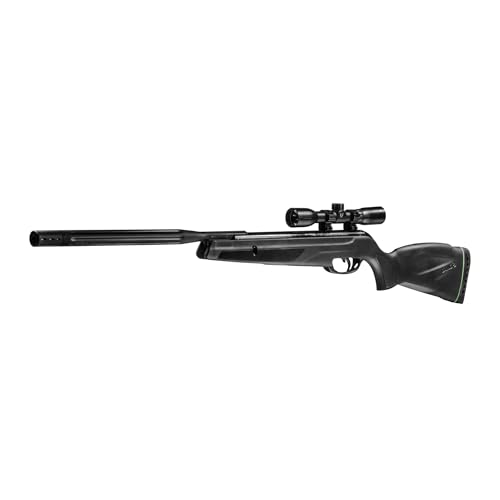
The verdict: the best .177 air rifle is the Gamo Wildcat Whisper — a gas-piston break barrel with a built-in barrel muffler and a 4x32 scope included, which makes it the one rifle here that arrives ready to shoot. It is for the buyer whose rifle will spend its life on paper, cans and backyard targets rather than on game. The budget pick is the Daisy Powerline 880: a recoilless multi-pumpthat shoots both pellets and BBs, costs the least on this page, and is the single best rifle here for teaching someone to shoot — because a rifle with no recoil cannot punish a bad hold.
The framing that makes a .177 page worth writing rather than folding into our general air rifle guide: the caliber is almost always chosen for the wrong reason. Buyers pick .177 because the box says the highest number, and the highest number on a .177 box is the one that tells you least about what the rifle will do. Chosen deliberately, .177 is the cheap, flat-shooting, high-volume caliber — the one that lets you shoot three times as much for the same money. That is a real advantage, and it is the one this page is built around.
The best .177 air rifles at a glance
| Rifle | Price & buy | Powerplant | Recoil | Optic included | Best for |
|---|---|---|---|---|---|
| Gamo Wildcat Whisper .177 | $147.69Buy | Gas piston break barrel, barrel muffler | Two-way, smoothed by the gas ram | 4x32 | Best overall |
| Daisy Powerline 880 .177 | $58.95Buy | Multi-pump pneumatic, rifled steel barrel | None | 4x15 | Budget pick; new and young shooters |
| Diana Two-Forty Classic .177 | $111.19Buy | Spring piston break barrel | Two-way, mild | None - open sights | All-day paper, family shooting |
Prices shown are from Amazon as of November 21, 2026 and change often — the button always goes to the current listing. Some links may earn us a commission at no extra cost to you.
Three rifles, deliberately. These are the .177 rifles on this site that we can buy today with a live price, and we would rather publish three we stand behind than pad the list with marketplace rifles nobody can tell apart. If your shortlist is a price band rather than a caliber, our air rifles under $200 guide covers the same ground with .22 rifles included.
What .177 is genuinely better at
There is a real case for the caliber, and it has nothing to do with velocity claims. Three things:
- Pellets cost materially less.A lighter projectile uses less lead, and .177 tins are the cheapest in any airgun aisle by a wide margin. If you are learning to shoot — which means firing thousands of pellets, not hundreds — that difference is the difference between practicing and rationing.
- It shoots flatter inside thirty yards. A faster, lighter pellet drops less over a short range, which makes holdover simpler and point-of-aim shooting more forgiving on a backyard range where the distances vary.
- Recoil and cocking effort are lower for the same rifle. The same action tuned for .177 generally cocks a little easier than its .22 sibling, which matters for smaller-framed and younger shooters more than any spec sheet admits.
And the honest counterweight, stated plainly because it decides a lot of purchases: .177 is not the small-game caliber. A light, fast pellet tends to over-penetrate on small game, passing through and carrying its energy away rather than depositing it. If hunting is any part of your plan, read our .22 air rifle guide and our .177 versus .22 comparison before you buy anything on this page.
The FPS trap that catches every .177 buyer
Walk the airgun aisle and the .177 rifles carry the biggest velocity numbers in the store. Those numbers are real and they are also close to useless, for one specific reason: the headline figure is almost always measured with an ultra-light alloy pellet, not with the lead pellets that actually shoot accurately.
Swap to a decent lead domed pellet — which you should, because alloy pellets are inconsistent and noisy — and the velocity drops substantially. Nothing is broken; the rifle was simply never going to deliver its box figure with ammunition worth shooting. The practical consequence is that two .177 rifles with very different box numbers can shoot within a few feet per second of each other once both are loaded with the same lead pellet.
How to choose: four specs that decide it
| Powerplant, before anything else | A multi-pump pneumatic (the Daisy) has no recoil at all, so it forgives a sloppy hold and is the easiest rifle to shoot well on day one. A break barrel (the Gamo and the Diana) has a two-way recoil impulse that is genuinely harder to shoot accurately and takes practice to master. Pick the powerplant to match how much coaching the shooter will get, not the velocity claim. |
|---|---|
| Gas piston or coiled spring | A gas piston replaces the spring with a sealed gas ram: smoother cycle, no spring buzz, and no spring left compressed in storage. The Gamo Wildcat Whisper publishes a gas piston; the Diana is a traditional spring piston. Neither is wrong - the gas ram is the easier rifle to shoot, the spring is the simpler mechanism. |
| Cocking effort, honestly measured | A magnum springer can need 30-plus pounds of cocking effort. The Diana Two-Forty needs about 18 to 20 pounds, which is what makes it a family rifle. If a smaller-framed or younger shooter will use the rifle, cocking effort decides whether it gets used at all - and it does not appear on any marketing bullet. |
| Whether the bundled scope is airgun-rated | Break barrels destroy ordinary scopes: the double-direction recoil drives internals in the opposite order to what a firearm scope expects. The Gamo ships a 4x32 and the Daisy a 4x15, and both are adequate to start and no more. Budget for an airgun-rated replacement eventually - our air rifle scope guide and scope mount guide cover what to look for. |
Best overall: Gamo Wildcat Whisper .177
Best for: the buyer whose rifle will shoot paper, cans and plinking targets, and who wants a complete setup in one box.
The Wildcat Whisper is the most complete .177 package on this page. Gamo publishes an IGT gas piston in place of a coiled spring, a built-in barrel muffler for noise reduction, and a bundled 4x32 scope, on an easy-cocking break barrel. In .177 the gas piston is the feature that matters most: a light pellet is unforgiving of a jolting firing cycle, and removing the spring buzz is the single biggest accuracy improvement available at this price.
The moderated barrel is worth more than it looks too. The commonest reason an air rifle gets put away is a neighbor, and a .177 break barrel with a muffled muzzle is quiet enough for a suburban garden in a way an unmoderated magnum springer is not. Our quietest air rifles guide covers how far that goes and where it stops.
Honest cons:it is still a break barrel, so it has the two-way recoil that makes any springer harder to shoot accurately than the Daisy multi-pump — expect to put in range time. The bundled 4x32 is adequate to start and not more than that, and it is the first thing most owners replace. And .177 over-penetrates on small game, so if hunting enters the plan this rifle is the wrong caliber rather than the wrong rifle.
Budget pick: Daisy Powerline 880 .177
Best for: parents teaching children, and anyone who wants the lowest-cost recoilless .177 for backyard paper.
The 880 is the cheapest rifle here and the most useful one to learn on, and those two facts are connected. Daisy publishes a multi-pump pneumatic action in .177, shooting pellets single-shot or BBs from a reservoir, up to 800 FPS with BBs, through a rifled steel barrel, with a 4x15 scope in the kit. Daisy states plainly on the listing what the real feature is: the pump handle controls your power.
That is the whole argument for it as a teaching rifle. A multi-pump has no recoil whatsoever, so a new shooter who holds it badly still sees where the pellet went, and the lesson lands. Start a beginner on a magnum break barrel and they learn that they cannot shoot; start them on an 880 and they learn that they can. It has stayed in production for more than thirty years on exactly that merit.
Honest cons:it is a budget rifle and it shows — basic scope, molded stock, simple trigger. It is strictly a paper-and-cans rifle, not a hunting one. And like every multi-pump, pump count changes point of impact, so pick a count, write it on the stock if you have to, and stick to it. Pumping it before every shot is also the most work of any rifle here.
Best to shoot well: Diana Two-Forty Classic .177
Best for: the shooter who wants a traditional break barrel for all-day paper and does not want to fight it.
The Two-Forty is the most honest rifle on this page: a spring-piston break barrel in .177 built to punch paper rather than chase a velocity figure. Diana rates it at about 575 FPS and 5.5 FPE with lead, and Hard Air Magazine measured roughly 555 FPS with a velocity standard deviation of about 7 FPS. It cocks with only about 18 to 20 pounds of effort, which makes it genuinely family-friendly, and the modest power makes it far lesshold-sensitive than a magnum springer — the reason a deliberately low-powered rifle can out-group a much faster one.
If there is one rifle here to hand a thoughtful adult beginner who wants to learn a springer properly, this is it. Our target shooting guide makes the same case at greater length.
Honest cons:it is deliberately low-powered, so it is a paper rifle and not a hunting one — even by .177 standards. It ships with open sights and no scope, so budget for an airgun-rated optic and mounts on top of the purchase price. And the spring buzz is audible even though the muzzle is quiet, which is the trade for the simpler mechanism.
The pellet decision matters more in .177
A .177 pellet weighs roughly half what a .22 pellet does, which means the projectile is far more sensitive to its own shape and consistency. Pellet choice is not a refinement in this caliber; it is a bigger accuracy variable than anything in the rifle.
Two rules cover most of it. Buy lead domed pellets, not alloy and not pointed: domes are the most aerodynamically forgiving shape at airgun speeds and lead is more consistent batch to batch. And buy two or three brands and test them, because barrels genuinely prefer different pellets and the difference is visible at twenty yards. Our air rifle pellet guide covers the shapes and which jobs they suit.
When to buy .22 instead
Three situations where the honest answer is a different caliber, and we would rather say so than sell you the page you landed on:
- Any small-game hunting or pest control. A heavier .22 pellet deposits more of its energy in the animal instead of carrying it out the other side. This is the main reason the caliber exists, and the reason our hunting air rifle guide is almost entirely .22.
- Shooting past about forty yards.The .177’s flat-shooting advantage is a short-range one; past that the heavier pellet carries better through wind and holds energy longer.
- If you want one rifle for everything. A .22 that also punches paper is a smaller compromise than a .177 that also hunts. The best air rifle for the money page lands on .22 for exactly this reason.
The bottom line
Buy the Gamo Wildcat Whisper if you want one box that contains everything, a quiet muzzle and the smoother gas-piston cycle. Buy the Daisy Powerline 880 if the shooter is a child or a complete beginner, because a recoilless rifle teaches and a recoiling one discourages. Buy the Diana Two-Forty Classic if you want to learn a springer properly and value a tight velocity spread over a big velocity number.
And be clear about what the caliber is for. Chosen as the cheap, flat, high-volume practice caliber, .177 is the right answer for most people buying their first air rifle. Chosen as a hunting caliber because the box promised the biggest number, it is the wrong answer — and our .177 versus .22 comparison exists to stop that purchase happening.
Frequently asked questions
What is the best .177 air rifle?
The Gamo Wildcat Whisper. It is the only rifle in this group that pairs a gas piston with a built-in barrel muffler and a bundled 4x32 scope, so it arrives as a complete setup. The gas piston matters specifically in .177, because a light pellet is unforgiving of a jolting firing cycle and removing the spring buzz is the biggest accuracy gain available at this price. The Daisy Powerline 880 is the budget pick and the better rifle for teaching a beginner, because a multi-pump has no recoil to punish a poor hold.
Is .177 or .22 better for an air rifle?
They are built for different jobs. The .177 is cheaper to feed, shoots flatter inside thirty yards and generally cocks easier, which makes it the better practice and paper caliber. The .22 fires a heavier pellet that deposits more of its energy in an animal instead of passing through, which makes it the small-game and pest-control caliber. If you will hunt at all, buy .22. If the rifle will shoot targets and cans, .177 lets you shoot far more for the same money.
Can you hunt with a .177 air rifle?
It is legal in many places and we still advise against it as a first choice. A light, fast .177 pellet tends to over-penetrate on small game, passing through and carrying energy away rather than depositing it, which costs you clean kills. The caliber also loses its flat-shooting advantage past about forty yards. If hunting is any part of the plan, our .22 air rifle guide and our hunting air rifle guide both recommend the heavier pellet for the same reason.
Why does my .177 air rifle not reach its advertised FPS?
Because the advertised figure was almost certainly measured with an ultra-light alloy pellet, not with the lead pellets that shoot accurately. Switch to a decent lead domed pellet - which you should, since alloy pellets are inconsistent and loud - and velocity drops substantially. Nothing is wrong with the rifle. Shot-to-shot consistency matters far more than peak speed anyway: the Diana Two-Forty is rated at about 575 FPS and measured by Hard Air Magazine at roughly 555 FPS with a standard deviation of about 7 FPS, and that spread is what puts pellets in the same hole.
What is the best .177 air rifle for a beginner?
The Daisy Powerline 880. It is a multi-pump pneumatic, which means it has no recoil at all, so a new shooter who holds it imperfectly still sees an honest result and learns from it. Daisy publishes a rifled steel barrel, pellet or BB feeding, up to 800 FPS with BBs and a 4x15 scope in the kit, and states that the pump handle controls the power - which also lets you start a child at low power. The one discipline it needs is a consistent pump count, because pump count changes point of impact.
Do I need a special scope for a .177 break barrel?
Eventually, yes. Break barrels recoil in two directions, and that impulse drives scope internals in the opposite order to what a firearm scope expects, which is why ordinary scopes fail on springers. The Gamo Wildcat Whisper ships a 4x32 and the Daisy a 4x15; both are adequate to start and both are the first thing most owners upgrade. Buy an airgun-rated scope and airgun mounts with a stop pin when you replace it - our air rifle scope and scope mount guides cover what to look for.
Sources
- Gamo Wildcat Whisper .177 Break Barrel Pellet Air Rifle - published listing specification (4x32 scope, gas piston, built-in barrel muffler)
- Daisy Powerline 880 .177 BB/Pellet Rifle Kit - published listing specification (4x15 scope, 800 FPS, rifled steel barrel, pump handle controls power)
- Diana Two-Forty Classic .177 Caliber Spring Piston Break Barrel Air Rifle - published listing specification
- Diana published ratings (575 FPS, 5.5 FPE) and Hard Air Magazine measured velocity (~555 FPS, ~7 FPS standard deviation), as recorded in our air rifles under $200 guide
Keep reading
Gearing up before your next hunt?
See how we evaluate gear, then dig into the reviews and buying guides — written without inventory to sell.