Buying Guide
The Best Air Rifle for the Money: Buy the System, Not the Rifle
Every other value guide ranks sticker prices. That is the wrong number. A precharged rifle cannot fire a single shot until you have bought a way to fill it - so the cheapest rifle on the shelf is routinely the most expensive rifle to own, and the fix is to price the whole system before you price the gun.
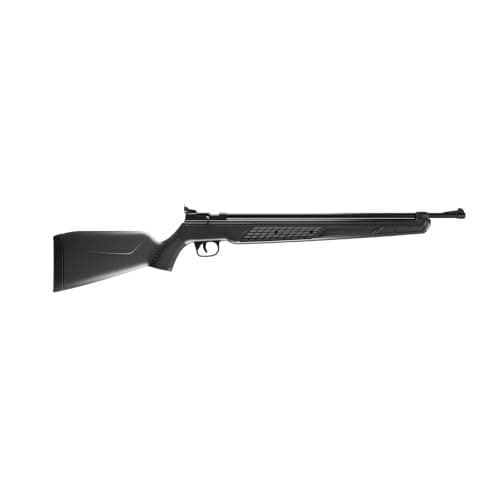
The best air rifle for the money is the Crosman C362, and the reason has almost nothing to do with its price tag. It is the cheapest working system on this page, because it is the only rifle here that makes its own air. Pump it, shoot it, pump it again. There is no compressor to research, no hand pump to buy, no carbon fiber tank to get hydro-tested, and no second trip to the checkout before you can hunt with it.
If you want precharged performance, the Umarex Origin is the value answer for one specific reason: it ships with a high-pressure hand pump in the box, and that pump on its own costs about as much as the whole Origin package. Everything below is the reasoning that produces those two answers, and the arithmetic that makes a cheaper rifle the more expensive choice.
Why sticker price is the wrong number
Firearms do not have this problem. You buy a rimfire, you buy ammunition, you shoot. An air rifle is different, because the air is the ammunition and somebody has to compress it. A precharged pneumatic (PCP) arrives with an empty reservoir and no way to fill it. Until you solve that, you own an expensive club.
That is why the question “what is the best .22 air rifle for the money?” cannot be answered off a price list. There are three genuinely different ownership models in this category, and they carry wildly different hidden costs:
| Break barrel (spring piston or gas ram) | You are the compressor. Cock the barrel, shoot once, cock again. Hidden cost: zero. Hidden cost in accuracy: real - the two-way recoil of a springer is the hardest thing in airgunning to shoot well, and it destroys ordinary rifle scopes. |
|---|---|
| Variable pump (multi-pump) | You are still the compressor, but you choose how much air goes in, which means you choose the power of each shot. Hidden cost: zero. Hidden cost in rhythm: you pump between every shot. |
| Precharged pneumatic (PCP) | A machine or a pump is the compressor. Recoilless, repeating, accurate, and the only route to real hunting energy with a magazine behind it. Hidden cost: a fill source, which is the single largest line in a first-time PCP budget. |
Ranking those three against each other on sticker price alone is how buyers end up with a cheap PCP they cannot fill. We have seen the same mistake in our air rifles under $200 guide, which caps by price, and our best .22 air rifles guide, which sorts by caliber. This page sorts by something neither of those can: what the whole setup costs when it is finished.
The four lines in an air rifle budget
Write these four down before you shop. Three of them are the same for every rifle on the page, and one of them is where all the money hides.
| 1. The rifle | The only number most guides quote. For a hunting-capable .22 it runs from the low three figures for a break barrel to the high hundreds for a refined PCP. |
|---|---|
| 2. The fill source (PCP only) | Zero for a springer or a pumper. For a PCP: a hand pump, a portable compressor, or a carbon fiber tank you pay a shop to fill. On the date we priced this page, a good hand pump and a portable compressor were each in the same money as a complete mid-tier PCP rifle. |
| 3. The optic | Budget combos ship a scope that is usually the first thing you replace, and a firearm scope cannot focus at 20 yards or survive a springer. Expect to spend real money once. Our airgun scope guide explains the two specs that decide it. |
| 4. Pellets, and something to stop them | Cheap per shot and non-negotiable per session. A tin of quality domed .22 pellets plus a trap rated for the energy you are producing is the smallest line here and the one people skip. |
The fill-gear trap, with the arithmetic
This is the section that changes buying decisions, so here are real figures rather than adjectives. We checked every one of these listings on 14 October 2026through the same price layer that feeds the live buy rows on this page — so treat the numbers as a snapshot of the relationship between these products, and take the current price from the buy row next to each pick.
| Route into a .22 PCP | Rifle | Fill source | System total | What you actually bought |
|---|---|---|---|---|
| Umarex Origin (pump included) | $329.99 | $0 - in the box | about $330 | A three-stage hand pump, a fill probe and a 60-shot-per-fill rifle, for one price |
| Umarex Notos + hand pump | $243.50 | $329.27 (Air Venturi MK5) | about $573 | The cheapest rifle here, and the second most expensive way to get shooting |
| Umarex Notos + compressor | $243.50 | $360.99 (GX-E-CS3) | about $604 | No pumping, but you paid 150 percent of the rifle's price for the privilege |
| Gauntlet 2 SL22 + compressor | $369.99 | $360.99 (GX-E-CS3) | about $731 | A regulated rifle and a machine that fills it - the serious hobbyist's floor |
| Crosman C362 (no PCP at all) | $123.94 | $0 - your right arm | about $124 | A hunting-capable .22 with no equipment chain behind it whatsoever |
Read the second row twice. The Notos is the cheapest rifle on the table and lands in the most expensive bracket but one, because the air costs more than the gun. That is the trap, stated as plainly as we can put it: the cheapest PCP is not the cheapest way into PCP. The Origin wins the category by deleting line 2 of the budget rather than by being a better rifle than the Gauntlet, which it is not.
One honest caveat on the pump-versus-compressor choice, because it is not purely financial. Hand pumping a large-reservoir rifle to 4,500 PSI is hard physical work, and the moisture your own breath-warm pump strokes put into a reservoir is a real long-term risk to a regulator. We work through duty cycles, water separators and the DOT marking that decides whether a US shop will even fill your tank in PCP compressors, pumps and tanks.
Cost per shot, and when it matters
Pellets are the one line in this budget that is genuinely cheap. A 500-count tin of Crosman Premier domed .22 pellets — the default accurate-and-affordable choice — worked out to roughly three cents a shot at the price we checked. A tin of premium match pellets might double that. Either way, you can shoot an air rifle all afternoon for less than the price of a box of rimfire.
Which produces an unintuitive conclusion about value: cost per shot is almost never the number that should decide your purchase.At three cents a pellet, you would have to fire something like ten thousand shots before ammunition cost moved the needle against a $300 difference in fill gear. Volume shooters should still care, and that is precisely the case for a regulated PCP like the Gauntlet 2 — not because the pellets are cheaper, but because a regulator turns one fill into roughly a hundred usable shots instead of twenty, and fills are what cost you time and equipment wear.
Budget the pellets and the trap in the same breath. A .22 producing hunting energy will punch straight through a cardboard box, and shooting at anything that is not rated for your muzzle energy is how pellets come back at you. Our pellet trap guide covers the ratings, and our pellet guide explains why the cheapest tin on the shelf is usually false economy in a rifle that deserves better.
The picks at a glance
| Rifle | Powerplant | Fill gear needed | Best value case | Price bracket |
|---|---|---|---|---|
| Crosman C362 | Variable pump, single shot | None | Best for the money overall | Entry |
| Umarex Origin | Unregulated PCP, 10-shot mag | None - pump included | Best PCP for the money | Mid |
| Umarex Prymex | Break barrel, single shot | None | Cheapest honest entry | Entry |
| Umarex Gauntlet 2 SL22 | Regulated PCP, side lever | Pump, compressor or tank | Best cost per shot, if you own air | Mid-upper |
| Benjamin Marauder BP22SAS | Semi-auto PCP | Pump, compressor or tank | The ceiling - refinement, not value | Upper |
Best air rifle for the money: Crosman C362
The C362 is a variable-pump single-shot .22 at the cheapest end of this page, and it wins on the only basis this page recognizes: its system cost equals its sticker price. Nothing else is required to shoot it. That alone would make it the value pick. What makes it the rightvalue pick is the variable pump itself, which is a genuine feature rather than a compromise — you decide how many strokes go in, so you decide the power of each individual shot. Three pumps for paper in the back yard, eight for a squirrel at 25 yards.
On energy, we use measured rather than advertised figures: Crosman rates the rifle up to 875 FPS with alloy pellets, and Hard Air Magazine chronographed roughly 611 FPS with 18.13-grain lead, which puts it comfortably over the 12 ft-lb bar we treat as the small-game minimum. That is a rifle, not a toy, and it needs the same trap and the same respect as anything else here.
Honest cons. It is a single shot and it is slow: you pump, you load, you shoot, you pump again, which rules it out for follow-up shots on pests. Top-end energy is modest against any PCP on this page. The pumping is tedious at the higher stroke counts, and it is work you repeat for every shot rather than every fill. And the fit and finish are what you would expect at this money. None of that changes the arithmetic: for a hunter who wants one airgun that works with nothing else bought, this is the most sensible purchase in the category.
Our full Crosman 362 review covers the known quirks in detail, and how to clean an air rifle explains the one maintenance rule a pumper owner should not get wrong.
Best PCP for the money: Umarex Origin (hand pump included)
If you want magazine-fed, recoilless, genuinely hunting-grade performance, the Origin is the value answer and it is not close. The argument is one sentence long: the three-stage hand pump and fill probe are in the box, and a comparable standalone hand pump costs roughly what the entire Origin package costs. You are, in effect, being handed the rifle.
Umarex designed it so that bundling would actually work. The Ever Pressure Tank keeps constant pressure on the reservoir air via a gas piston, so the rifle delivers usable shots without being topped to maximum every time — which is the difference between a pump being practical and a pump being abandoned in a cupboard. Hard Air Magazine measured the effect: the Origin reached 2,000 PSI in 50 pump strokes where a conventional Benjamin Maximus needed 115 to hit its own full 2,000 PSI. Umarex publishes a 3,625 PSI maximum fill and 40 shots per fill; HAM recorded 60 shots averaging 28.31 ft-lb (944 FPS with 14.3-grain pellets). Two 10-shot magazines are included and the barrel is shrouded.
Honest cons, and they are real.It is unregulated, so velocity drifts across the shot string — HAM says outright that this is not regulated-PCP consistency. There is a high-pitched firing twang that HAM found gets markedly louder as fill pressure falls. The advertised pump count is optimistic: HAM needed 140 strokes to reach a full 3,650 PSI, not the 100 claimed. The Ever Pressure reservoir is not owner-serviceable— Umarex insists only its own gunsmiths open it, which is a genuine long-term ownership consideration. And it ships without sling studs. Stock on this listing has been thin; check the buy row below before you plan around it.
Worth saying plainly: the Origin is the best value PCP here, not the best PCP here. If you already own a compressor, skip it and read the Gauntlet section. Our PCP air rifle guide ranks the platform on merit rather than on system cost.
Cheapest honest entry: Umarex Prymex
The Prymex is a break-barrel .22 at the bottom of the page, and we include it for a reason that has nothing to do with it being the best rifle at anything: it is the cheapest honest way to answer the question do I actually enjoy this? before you commit to an equipment chain. Buy it, buy a tin of decent pellets and a trap, shoot a season. If airgun hunting sticks, you have lost very little and learned a great deal about what you want next.
Honest cons.Break barrels have the two-way recoil described above, which makes them measurably harder to shoot accurately than any PCP here — a sharp forward jolt follows the rearward one, and it is the single most common reason a new shooter blames a rifle for their own groups. Budget combo scopes are usually the first thing to replace, and the replacement must be airgun-rated. Single shot, and cheap springers are less consistent shot to shot than anything precharged.
If a springer is where you land, read best air rifle scopesfirst — the recoil-rating question is the one spec that decides whether your optic survives the year — and best break barrel air rifles for the wider field.
Best cost per shot: Umarex Gauntlet 2 SL22
The Gauntlet 2 is the value pick for the shooter who already owns air, and in that situation it beats the Origin convincingly. It is regulated from the factory, which is the single most consequential feature on a PCP: the regulator hands every shot the same pressure regardless of how full the reservoir is, so velocity spread collapses and the number of usable shots per fill rises sharply. Where an unregulated rifle gives you a velocity bell curve and a sweet spot to work inside, the Gauntlet 2 delivers close to a hundred shots before it falls off the regulator. Side-lever cocking is faster and smoother than a bolt, which matters on a second shot.
This is where the cost-per-shot argument from earlier finally earns its keep. Pellets are three cents either way; fills are the expensive part of PCP ownership, in pump labor, compressor hours and eventual maintenance. A regulated rifle buys you five times fewer fills for the same afternoon of shooting.
Honest cons.No fill equipment is included, and that is the whole reason it does not win this page outright — add a pump or compressor and the system cost roughly doubles. It is heavier and louder than a Marauder. And this listing has repeatedly shown very low stock, so confirm availability in the buy row rather than assuming it.
Where value stops: Benjamin Marauder BP22SAS
We include the Marauder to mark the line rather than to recommend crossing it. It is a semi-automatic .22 PCP with the best build quality of anything on this page, and the semi-auto action is genuinely useful on pest work where a follow-up shot decides the outcome. It is also roughly four to five times the price of the C362 before you have bought a single cubic inch of air.
What the extra money buys: refinement, a better trigger, a quieter report, and an action that does not interrupt your sight picture. What it does not buy: a meaningfully deader squirrel. The C362 and the Origin both clear the energy bar for small game at sane ranges, so above the Gauntlet 2 you are paying for the experience of shooting, which is a completely legitimate thing to buy and a completely different question from value.
Honest cons. Price, plus fill gear on top of it. Semi-auto actions are more complex and there is simply more to go wrong than on a side-lever. And at the time of writing this listing was down to very thin stock, which we would rather tell you than let you discover at the checkout. Our Benjamin Marauder review goes through it properly, and the Benjamin brand guide puts it in the context of the range.
The counter-example worth understanding: Umarex Notos
The Notos is a good rifle and it is deliberately not one of our five value picks, because it is the clearest illustration of this page’s whole argument. It is the cheapest genuine PCPin the registry — a short, light carbine, regulated at 1,900 PSI, chronographed by Hard Air Magazine at 18.99 ft-lbwith 14.35-grain JSB Exact pellets (772 FPS), about 31.5 to 34 inches long and 4.15 pounds bare. Those are genuinely attractive numbers, and in tight places — barns, outbuildings, fencelines — a carbine is worth real money.
And yet it is a poor value buy for a first-time PCP owner, because its small reservoir yields only about 21 fully regulated shotsand it arrives with no way to fill it. Pair the cheapest PCP rifle with the fill gear it requires and you spend meaningfully more than the Origin costs complete, for fewer shots per fill. Buy the Notos because you want a compact stalking and pest carbine and already own air — never because it was the cheapest PCP on the shelf.
The bottom line
Buy the Crosman C362 if you want the most capability per total dollar in airgunning, full stop. It is the only rifle here that costs what it says it costs, the variable pump is a real feature, and measured energy clears the small-game bar. The price of that value is rhythm: one shot, then pump again.
Buy the Umarex Origin if you want PCP performance this season without researching compressors. A hand pump is included, HAM measured 60 shots at 28.31 ft-lb per fill, and the whole package costs roughly what a standalone pump costs. Accept unregulated velocity drift, a firing twang that grows as pressure falls, and a sealed reservoir only Umarex may open.
Buy the Gauntlet 2 SL22only once you own a fill source — at which point it is the best value here, because regulation turns one fill into roughly five fills' worth of usable shots.
And whatever you buy, price lines 2 through 4 before you spend line 1. A tin of decent domed pellets and a trap rated for your energy are the cheapest items in this entire category and the two most often left out of the budget. If you are still deciding on caliber, our .177 vs .22 comparison settles it with one equation rather than opinions.
Frequently asked questions
What is the best .22 air rifle for the money?
The Crosman C362, because value in airgunning is system cost rather than sticker price. It is a variable-pump .22 that compresses its own air, so there is no pump, compressor or tank to buy - its total cost equals its price. Hard Air Magazine chronographed roughly 611 FPS with 18.13-grain lead, comfortably over the 12 ft-lb we treat as the small-game minimum.
Is a cheap PCP air rifle good value?
Usually not, and this is the most expensive mistake in the category. A PCP arrives with an empty reservoir and no way to fill it, and on the date we priced this page a good hand pump or a portable compressor each cost about as much as a complete mid-tier PCP rifle. The cheapest PCP rifle plus the fill gear it needs costs substantially more than the Umarex Origin does complete, because the Origin includes a hand pump.
How much does it cost to shoot an air rifle per shot?
Roughly three cents a shot with quality domed .22 pellets at the price we checked, perhaps double that with premium match pellets. That is cheap enough that cost per pellet should almost never decide your purchase - you would need to fire thousands of shots before it outweighed a difference in fill gear. What costs real money in PCP ownership is fills, not pellets, which is the argument for a regulated rifle.
Do I need a compressor for a PCP air rifle?
You need some fill source: a hand pump, a portable compressor or a carbon fiber tank you pay a shop to fill. A hand pump is the cheapest to buy and by far the hardest work, and it introduces moisture that is a long-term risk to a regulator. A compressor removes the labor and costs more up front. The one way to avoid the decision entirely is to buy a rifle that ships with a pump, or a rifle that does not need compressed air at all.
Is a break barrel or a PCP better value?
A break barrel is cheaper to own and harder to shoot well; a PCP is more expensive to set up and far easier to shoot accurately. The two-way recoil of a spring-piston rifle - a sharp forward jolt after the rearward one - is the hardest thing in airgunning to master and it also destroys scopes that are not rated for it. If you expect to shoot regularly, the PCP route pays you back in groups; if you want to find out whether you enjoy airgunning, a break barrel is the cheapest honest test.
Does a regulated PCP save money?
Not on pellets - on fills. A regulator delivers each shot at the same pressure regardless of reservoir level, so velocity spread collapses and usable shots per fill rise dramatically: the Umarex Gauntlet 2 gives close to a hundred shots before falling off its regulator, against about 21 fully regulated shots from a small-reservoir carbine like the Notos. Fewer fills means less pump labor and fewer compressor hours, which is where PCP ownership actually costs you.
Sources
- Hard Air Magazine - Umarex Origin PCP review: 50 pump strokes to 2,000 PSI vs 115 for a Benjamin Maximus, 60 shots at an average of 28.31 ft-lb (944 FPS with 14.3-grain pellets), 140 strokes to a full 3,650 PSI, unregulated velocity spread and firing twang
- Umarex USA - Origin .22 PCP with high-pressure hand pump: Ever Pressure Tank, 3,625 PSI max fill, 40 shots per fill, two 10-shot magazines, shrouded barrel, pump and fill probe included
- Umarex USA - Gauntlet 2 SL22 specifications (regulated, side-lever, onboard bottle)
- Hard Air Magazine - Umarex Notos CRK .22 test review: 1,900 PSI regulator, 18.99 ft-lb with 14.35-grain JSB Exact (772 FPS)
- Umarex USA - Notos carbine specifications (length, weight, reservoir)
- Hard Air Magazine - Crosman 362 launch coverage and chronograph data: roughly 611 FPS with 18.13-grain lead pellets against a rated 875 FPS with alloy
- Prices, product images and stock status via the Amazon Creators API price layer, refreshed daily. System-cost figures in this guide were read from that layer on 14 October 2026
Keep reading
Gearing up before your next hunt?
See how we evaluate gear, then dig into the reviews and buying guides — written without inventory to sell.