Buying Guide
Best Big Bore Air Rifles for Deer and Hogs: Start With the Law, Not the Energy
A big bore airgun is the one air rifle purchase where a spec sheet can be perfect and the gun still illegal. Caliber minimums for deer run from .30 in Texas to .45 in West Virginia, and the most-searched big bore caliber - .357 - fails in more states than it passes. Here is how to size the legal threshold first, then five big bores you can actually buy today.
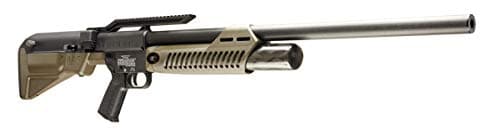
The best big bore air rifle for deer is the Umarex Hammer .50, and the reason is legal before it is ballistic. Umarex publishes 705.5 ft-lb from a 550-grain .50-caliber slug at 760 fps — which means it clears every published state caliber and energy minimum we were able to read, including West Virginia’s .45-caliber floor, the strictest we found. It is also the only gun on this page that gives you three full-power shots on one fill instead of one or three-at-reduced-power.
If 43.75 inches is more rifle than your blind allows, the Benjamin Bulldog .457 is the pick: up to 450 ft-lb in a 36.3-inch bullpup. And if you came here searching for a .357 because that is the caliber everybody writes about, read the legality section first. A .357 is legal for deer in Virginia, categorically illegal for deer in Missouri, and has to clear a separate energy test in Texas. That single fact is why this page is organized the way it is.
Why caliber law comes before energy
Every other air rifle buying decision starts with power. Our best air rifles for hunting guide sizes rifles by quarry, from squirrels up to hogs, and the tool it uses is measured foot-pounds at the animal. Big bore is the one category where that order is wrong, because a big bore airgun bought for deer has to pass a test no amount of energy can substitute for: bore diameter.
State wildlife agencies do not generally regulate airguns by how hard they hit. They regulate them by caliber, with energy or velocity as a second filter in a minority of states. That produces a situation with no parallel in firearms: a 300 ft-lb .357 can be illegal for deer in a state where a 150 ft-lb .45 is legal, purely on bore. Buy the energy and ignore the bore and you own an expensive, deeply capable rifle you are not allowed to carry in the season you bought it for.
There is a second reason to lead with the law. Big bore airguns are a thin, specialist market: new guns run roughly $900 to $1,400, stock is routinely down to single units at any given retailer, and returns on a used-once hunting airgun are not kind. This is not a category where you can afford to guess and swap.
State caliber minimums, five examples
Below are five states whose published rules we read directly, chosen because they disagree with each other in instructive ways. This is not a national survey and must not be used as one — read your own state’s current regulations before you spend a dollar.
| State | Minimum for deer / big game | Second filter | Notable restriction |
|---|---|---|---|
| Texas | .30 caliber, 150-grain projectile | 800 fps minimum, OR any weight/velocity combination producing 215 ft-lb | Whitetail, mule deer, pronghorn, javelina, bighorn, alligator and most turkey may be taken ONLY with pre-charged pneumatic guns |
| Michigan | .35 caliber or larger | None published | Must be charged only from an external high-compression source - hand pump, tank or compressor |
| Virginia | .35 caliber or larger | None published | Pneumatic rifles are prohibited outright for bear and elk; sub-.35 air guns are legal for turkey and small game |
| Missouri | .40 caliber or larger | None published | Rules out a .357 for deer entirely; external high-compression fill source only |
| West Virginia | .45 caliber AND a bullet of at least 200 grains | None published | Air rifles may not be used during muzzleloader season, and only in counties that permit firearm deer hunting |
Read those five rows together and three conclusions fall out. First, .357 is the trap caliber: it passes in Virginia and Michigan, fails flatly in Missouri and West Virginia, and in Texas has to also clear 215 ft-lb — which a .357 can do, but only if the gun actually produces what the box says. Second, .45 and up is the only tier that is simple, because a .45 satisfies the strictest minimum we found. Third, several states regulate the fill method as well as the bore: Michigan and Missouri both require an external high-compression source, which quietly excludes spring-piston and CO2 guns no matter their caliber.
The five picks compared
| Rifle | Caliber | Published energy | Full-power shots per fill | Length / weight |
|---|---|---|---|---|
| Umarex Hammer .50 | .50 | 705.5 ft-lb (550 gr at 760 fps) | Three, with a fourth at roughly 90% | 43.75 in / 8.5 lb unscoped |
| Benjamin Bulldog .457 | .457 | Up to 450 ft-lb (760 fps published) | Three (the tray holds three) | 36.3 in / 8.75 lb |
| AirForce Texan | Caliber not stated in the listing - confirm before ordering | Independent testing recorded 505.98 ft-lb from a .45 with a 405 gr projectile | One - single shot | 48 in / 8 lb (.45 spec) |
| Umarex Hammer Carbine .50 | .50 | Umarex publishes the Hammer platform at 705.5 ft-lb | Same regulated platform as the full-length Hammer | Shorter than the 43.75-in Hammer; figure not published |
| Benjamin Bulldog M357 | .357 | Marketed at up to 300 ft-lb; 1,100 fps retailer-published | Five-shot magazine, one magazine per fill | 440cc reservoir at 3,000 psi |
Specifications are manufacturer- or retailer-published except where noted as independent testing. Treat every one of these energy figures as a ceiling, not a working number — see the warning in the criteria section below. Prices move constantly; every number on this page comes from the live price checks, stamped with the date each was captured.
What to check before you buy
| Bore, against your state's exact wording | Not 'big bore' - the number. A .357 measures .357, which is below a .40 or .45 minimum. If the regulation says .45 and 200 grains, both halves apply. |
|---|---|
| Published energy vs measured energy | Big bore marketing numbers are optimistic. Outdoor Life measured roughly 180 ft-lb from a full-production Bulldog .357 against Crosman's 200 ft-lb claim - a 10% shortfall on a figure that in Texas is the difference between legal and not. |
| Shots per fill | This is the real big bore compromise. Most are one to three full-power shots, then a refill. A follow-up shot on a wounded animal may not exist. Plan for a first-shot-only rifle. |
| Fill pressure and fill source | 3,000 psi guns can be hand-pumped with effort; the Hammer's 4,500 psi reservoir realistically needs a compressor or a tank. Michigan and Missouri both require an external high-compression source by rule. |
| Slug supply for your exact bore | Big bore slugs are not interchangeable and not stocked everywhere. Confirm ammunition availability in your caliber and weight before you commit to the platform. |
| Length and weight, scoped | These are heavy rifles. 8 to 8.75 pounds bare becomes 10-plus pounds with glass, and a 48-inch Texan does not swing in a pop-up blind. |
| Effective range, honestly | A heavy slug at 760-1,100 fps drops fast. Big bore airgun shots on deer are short-range, broadside, lung shots. If you want 100 yards, you want a different tool. |
Best overall: Umarex Hammer .50
The Hammer is the gun that makes the legal question go away. At .50 caliberit clears every published minimum in the table above, including West Virginia’s .45-and-200-grain floor, and Umarex publishes 705.5 ft-lb with a 550-grain slug leaving at 760 fps. Lighter slugs go faster — Umarex quotes over 1,000 fps with a 250-grain — and the platform is sold with slug weights from 200 to 550 grains.
The engineering that matters is the regulator. The Hammer holds 4,500 psi and regulates it down to 3,000 psi per shot, which is how it delivers three full-power shots with a fourth at roughly 90 percent. In a category where one shot per fill is normal, three consistent shots is the single biggest practical advantage on this page. The straight-pull bolt takes about two pounds of effort, so cycling it does not disturb a rested rifle.
Honest cons. It is 43.75 inches long and 8.5 pounds unscoped, so figure well over ten pounds in hunting trim — this is a sit-and-wait rifle, not a spot-and-stalk one. The 4,500 psi reservoir is the real ownership cost: hand-pumping to 4,500 psi is punishing and most owners end up buying a compressor or a carbon-fiber tank, which is several hundred dollars nobody mentions in the headline price. And .50-caliber slugs are a specialist consumable — you will be ordering them, not picking them up locally.
Who it is for: the hunter who wants one big bore that is legal wherever airgun big game is legal at all, and who accepts a compressor as part of the purchase.
Best bullpup: Benjamin Bulldog .457
The Bulldog .457 is the answer to the Hammer’s length. It is a bullpup — action behind the trigger — which packs a 28.5-inch barrel into a 36.3-inch overall rifle at 8.75 pounds. That is seven and a half inches shorter than the Hammer with a barrel only six inches shorter, and in a ground blind or a tight stand that difference is the whole argument.
Benjamin publishes up to 450 ft-lb at 760 fps from the 440cc reservoir at 3,000 psi. The 3,000 psi fill is worth noting as a genuine advantage over the Hammer: it is within reach of a good hand pump, which keeps the entry cost honest. The .457 bore also clears the strictest caliber minimum we found, so legally it sits in the same easy tier as the .50.
Honest cons. The magazine is a three-round gravity-fed tray, and reviewers are blunt that three is all a fill gives you — so the tray capacity is not extra shots, it is just not having to handle slugs between them. Bullpups put the trigger far forward of the sear, and a long linkage is rarely as crisp as a conventional trigger; expect a heavier, mushier pull than the price suggests. It is also the heaviest-feeling gun here relative to its size, because all that mass sits in a short package.
Who it is for: the blind and treestand hunter who wants .45-class legality and energy without a 48-inch rifle, and who would rather hand-pump than own a compressor.
Most energy per dollar: AirForce Texan
The Texan is the rifle that put American big bore airguns on the map, and it still posts the highest independently measured energy figure we could find for a .45: a shooting-press test recorded 505.98 ft-lb on the first shot with a 405-grain hollow-base lead projectile, with the platform capable of launching a .45 slug at 1,000 fps. The .45 Texan spec is 48 inches, 8 pounds, a 34-inch Lothar Walther barrel and a 490cc tank at 3,000 psi— a single-shot, side-lever-cocked rifle built around one job.
Honest cons. It is a single shot, full stop — one shot, then a refill, which is the least forgiving configuration on this page. At 48 inches it is the longest rifle here by a wide margin and awkward in any enclosed blind. There is no stock in the conventional sense on the base Texan, so ergonomics are an acquired taste. And it is the most expensive option on this page at the price we checked.
Who it is for: the hunter who wants maximum measured energy from an open stand or a field edge, is content with one shot, and will verify the caliber in writing before buying.
Shortest .50: Umarex Hammer Carbine
The Hammer Carbine is the same regulated .50-caliberHammer action in a shorter package, for hunters who want the full-length gun’s legality and energy without its handling. Umarex publishes the Hammer platform at 705.5 ft-lb on a 550-grain slug, with the same 4,500 psi reservoir regulated to 3,000 psi per shot and the same low-effort straight-pull bolt. If you hunt from a pop-up blind, out of a UTV, or in thick cover, this is the version to look at.
Honest cons.Umarex does not publish a carbine-specific overall length or energy figure that we could find, so you are buying on the platform’s numbers rather than the variant’s — a shorter barrel generally costs some velocity, and we are not going to invent a figure for how much. It carries a premium over the full-length Hammer. And it inherits the Hammer’s 4,500 psi fill requirement, so the compressor conversation is unchanged. Stock was down to a single unit when we checked, which in this category is normal and still worth knowing before you plan around it.
Who it is for: the blind or vehicle hunter who has already decided on .50 and wants the handier of the two.
Hogs and predators: Benjamin Bulldog M357
The M357 is the updated .357 Bulldog: a five-shot magazine, a Lothar Walther barrel, a 440cc reservoir at 3,000 psi, and retailer-published velocity up to 1,100 fps. Benjamin markets it at up to 300 ft-lb, a meaningful step up from the original Bulldog .357. Of everything on this page it is the easiest to shoot and the easiest to feed: five shots in the tray, 3,000 psi fills a hand pump can manage, and .357 slugs are the most widely stocked big bore ammunition.
Honest cons — and on this gun the biggest one is legal. .357 is below the deer minimum in Missouri (.40) and West Virginia (.45), so in those states this rifle is a hog and predator gun and nothing else. In Texas it is legal for whitetail only if it also clears 215 ft-lb, which brings in the second problem: Outdoor Life measured roughly 180 ft-lbfrom a full-production Bulldog .357 against Crosman’s 200 ft-lb claim at the time, so the published 300 ft-lb for the M357 deserves verification against your own chronograph before you treat it as a legal qualification. The five-shot magazine also needs a refill after one load rather than giving you five full-power shots of consistent energy.
Who it is for:the hog, coyote and predator hunter who wants the most shootable, best-supplied big bore, and who has read their own state’s deer rule and accepted the answer. Our hunting air rifle roundup covers this caliber class in the context of quarry rather than law.
The air behind the gun
A big bore is half a purchase. Every rifle here is pre-charged pneumatic, which means the gun does not work without a high-pressure air source — and in Michigan and Missouri the regulations specifically require that source to be external. Budget for it in the same breath as the rifle.
For the 3,000 psiguns — the Bulldogs and the Texan — a quality hand pump is genuinely viable. The Benjamin high pressure hand pump is the brand-matched option and the cheapest honest route into the category. It is hard work: filling a 440cc reservoir to 3,000 psi by hand is a sweaty few hundred strokes, and the usual advice is to rest between sets so the pump does not overheat.
For the 4,500 psi Hammers, a pump stops being realistic and a compressor starts being the sane answer. The Umarex ReadyAIR Gen 2 is a portable high-pressure unit built for exactly this job. Our best PCP air compressors guide covers the whole decision properly, including the one trap that catches American buyers: a carbon-fiber cylinder needs a DOT certification to get filled at a US dive or paintball shop, and a CE-only cylinder will be refused.
Slugs, and why they are not pellets
Big bore airguns shoot slugs, not diabolo pellets. A pellet is a waisted, drag-stabilized projectile designed to be stable at subsonic speeds in a small caliber; a slug is a solid lead bullet that relies on spin. They are not interchangeable, they are not priced alike, and your rifle will shoot one slug weight noticeably better than the others.
Umarex sells .50-caliber SLA slugsfor the Hammer in several weights — the 388-grain is the mid-weight option, with 320-grain and heavier 550-grain loads available for different velocity and energy targets. Expect to buy two or three weights and shoot groups before you commit, exactly as you would with pellets in a small-caliber rifle. One practical warning: big bore slugs come in small counts — twenty rounds a tin is common — so a range session costs real money and you should not plan on high-volume practice.
You also need glass that survives a big bore’s recoil impulse and holds a zero on a rifle that gets filled and unfilled constantly. Our air rifle scope guide and sight-in walkthrough both apply here, with one addition: zero on a full reservoir and verify on the last shot you intend to hunt with, because velocity falls as pressure does. And because these are eight- to nine-pound rifles you usually get one shot with, a shooting stick or tripod does more for a big bore than it does for a centerfire.
The bottom line
Buy the Umarex Hammer .50 if you want one big bore that is legal anywhere airgun big game is legal at all, and the only one here that gives you three full-power shots. Buy the Benjamin Bulldog .457 if you need that legality in 36 inches instead of 44, and would rather hand-pump than buy a compressor.
Buy the AirForce Texan for the highest independently measured energy on this page, after you have confirmed the caliber in writing. Buy the Hammer Carbine if you have settled on .50 and hunt somewhere a 44-inch rifle will not go. And buy the Bulldog M357if your quarry is hogs and predators — it is the most shootable gun here, and the caliber most likely to be illegal for the deer you were picturing.
Whatever you pick: read your state’s current regulation, in its own words, before you order. The spec that disqualifies a big bore airgun is almost never the one on the front of the box.
Check the Umarex Hammer .50 price on Amazon. If after reading the legality table you have concluded this is more rifle than your hunting actually needs, that is the right conclusion more often than not — our hunting air rifle guide starts at $150 and covers squirrels through hogs.
Frequently asked questions
Can you hunt deer with an air rifle?
In a number of states, yes, with a big bore pre-charged pneumatic rifle that meets a published caliber minimum. Those minimums vary widely: Texas requires .30 caliber with a 150-grain projectile plus either 800 fps or 215 ft-lb, Michigan and Virginia require .35 or larger, Missouri requires .40 or larger, and West Virginia requires .45 caliber with a bullet of at least 200 grains. Several states also require the gun to be charged only from an external high-compression source. Read your own state's current regulations before buying.
Is a .357 air rifle legal for deer?
It depends entirely on the state, and .357 is the caliber most likely to fail. It is legal for deer in Virginia and Michigan, which set a .35 minimum. It is not legal for deer in Missouri (.40 minimum) or West Virginia (.45 and 200 grains). In Texas a .357 clears the caliber bar but must also produce 215 ft-lb or 800 fps, which means the gun's actual measured energy matters, not its advertised figure.
What is the most powerful big bore air rifle you can buy?
Of the currently available rifles on this page, the Umarex Hammer .50 has the highest manufacturer-published figure at 705.5 ft-lb with a 550-grain slug at 760 fps. The AirForce Texan has the highest independently measured figure we found - 505.98 ft-lb on the first shot with a 405-grain .45 projectile in a shooting-press test. Published numbers are first-shot, full-reservoir, best-slug figures and should be treated as ceilings.
How many shots do you get from a big bore air rifle?
One to three full-power shots, then a refill. The Umarex Hammer is the standout because its regulator delivers three full-power shots with a fourth at roughly 90 percent. The Benjamin Bulldog .457 holds three in the tray, which is also about what a fill supports. The AirForce Texan is single shot. Plan your hunt around a first-shot rifle - a fast follow-up may not be available.
Do you need a compressor for a big bore air rifle?
For a 3,000 psi gun like the Benjamin Bulldogs or the AirForce Texan, a good hand pump will do the job, with real physical effort. For the 4,500 psi Umarex Hammer, a compressor or a carbon-fiber tank is the practical answer. Either way, budget for the air source as part of the purchase - and if you buy a cylinder, buy a DOT-certified one, because US dive and paintball shops will refuse to fill a CE-only cylinder.
Are big bore air rifles quieter than firearms?
Quieter than a centerfire rifle, yes, but not quiet. A big bore airgun releasing several hundred foot-pounds makes a substantial report, and the impact of a heavy slug is loud on its own. If low noise is your actual goal rather than power, a small-caliber air rifle is the right tool - see our quietest air rifles guide, which treats noise as the buying criterion.
Is a big bore air rifle worth it over a regular rifle?
Only for a specific reason: an airgun big game season or zone your state offers, a property where report matters, or the interest itself. On pure capability a centerfire rifle is cheaper, lighter, longer-ranged and sold with ammunition at every hardware store. Big bore airguns are a deliberate choice, not a value one, and the honest first question is whether your state's rules give you anything by making it.
Sources
- Texas Parks & Wildlife Department, Outdoor Annual - means and methods: pre-charged pneumatic air guns must fire a projectile of at least .30 caliber and 150 grains at a minimum 800 fps, or any combination producing 215 ft-lb
- West Virginia Code §20-2-5k, Use of air rifles to hunt - no big game with an air rifle of less than .45 caliber and a bullet of less than 200 grains
- Virginia Administrative Code 4VAC15-270-96 - pneumatic rifles must be .35 caliber or larger for deer; prohibited for bear and elk
- Virginia DWR, legal use of firearms and archery tackle - air gun rules by caliber and species
- Missouri Department of Conservation - air-powered firearms for deer must be .40 caliber or larger and charged only from an external high compression source
- Michigan DNR hunting regulations - a .35 caliber or larger air rifle or pistol must be charged only from an external high-compression power source
- Umarex USA, Hammer .50 published specifications - 705.5 ft-lb, 760 fps with a 550-grain slug, 4,500 psi regulated to 3,000 psi, three full-power shots, 43.75 in, 8.5 lb
- Benjamin Bulldog .457 published specifications - up to 450 ft-lb, 760 fps, 440cc at 3,000 psi, three-round tray, 36.3 in, 8.75 lb
- Benjamin Bulldog M357 (BPBM3S) published specifications - .357, 1,100 fps, five-shot magazine, 3,000 psi
- AccurateShooter Bulletin test of the AirForce Texan - 505.98 ft-lb measured at the muzzle with a 405-grain hollow-base projectile; .45 platform specs (48 in, 8 lb, 34-in barrel, 490cc at 3,000 psi)
- Outdoor Life Benjamin Bulldog review - measured roughly 180 ft-lb from a full-production .357 against a 200 ft-lb claim
- Prices, product images and stock status via the Amazon Creators API price layer, refreshed daily
Keep reading
Gearing up before your next hunt?
See how we evaluate gear, then dig into the reviews and buying guides — written without inventory to sell.